Showing posts with label review. Show all posts

6.14.2016

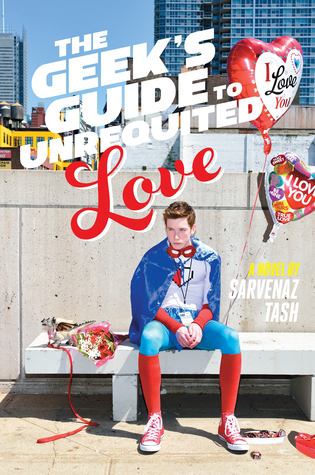
Book Review: THE GEEK'S GUIDE TO UNREQUITED LOVE

It's been a stretch since my last book review, but I am SO EXCITED to share my thoughts on Sarvenaz Tash's newest book because it's about something near and dear to my heart - geeks!


THE GEEK'S GUIDE TO UNREQUITED LOVE is OUT TODAY, and if you get it this week, you can get a geeky swag pack, including a signed book plate! Details here.

Anyway, on to the review!


Disclaimer: Won an ARC through a Twitter giveaway held by the author. Twitter friends with the author. I am not part of the blog tour and am reviewing this book of my own accord.

PROS: Quick read, good representation of geek life, strong narrative voice, funny

CONS: non-POV characters are a little lightly sketched, pop culture references could be overwhelming to the non-initiated

Intellectual Rating: 7 out of 10
Emotional Grade: A

Goodreads blurb: John Hughes meets Comic Con in this hilarious, unabashedly romantic, coming-of-age novel about a teenager who is trying to get his best friend to fall in love with him from the author of Three Day Summer.

Peter Parker and Gwen Stacy...
Archie and Veronica...
Althena and Noth...
...Graham and Roxy?

Graham met his best friend, Roxana, when he moved into her neighborhood eight years ago, and she asked him which Hogwarts house he’d be sorted into. Graham has been in love with her ever since.

But now they’re sixteen, still neighbors, still best friends. And Graham and Roxy share more than ever—moving on from their Harry Potter obsession to a serious love of comic books.

When Graham learns that the creator of their favorite comic, The Chronicles of Althena, is making a rare appearance at this year’s New York Comic Con, he knows he must score tickets. And the event inspires Graham to come up with the perfect plan to tell Roxy how he really feels about her. He’s got three days to woo his best friend at the coolest, kookiest con full of superheroes and supervillains. But no one at a comic book convention is who they appear to be...even Roxy. And Graham is starting to realize fictional love stories are way less complicated than real-life ones.


REVIEW

Getting right to it, I loved this book. It was everything I hoped it would be - a love letter to being a geek and a sweet teen romance about grand gestures and friendship. The plot revolves around Graham and his epic plan to confess his love to his best friend (and comics co-creator) Roxy at NYCC. There is just enough drama to keep things interesting - because let's face it, nothing ever totally goes right when it comes to Comic Con - and more geeky references than you can shake a stick at.

One of my biggest concerns going into this book, actually, was how geek life might be portrayed. We've all read or seen portrayals of geeks that might've felt forced or ultimately seemed to denigrate the culture, and while I didn't think Tash would have that problem (I know her to be a big geek herself), there was still that slight fear. I was quickly reassured that I was in good hands. I recognized so much of what I've lived and what I've witnessed in terms of being a geek in both Graham and Roxy. They both felt like my people, in love with their fandoms and unabashedly proud of it.

Tash also wonderfully captures the heady but also frustrating experience of geek convention-going. NYCC is an unexplored land for me, but I've been to San Diego Comic Con (this year will be my 4th!), and let me tell you, some of the nerd rage moments in this book are so, so real (two words: line drama). Of course, Tash shows us some of the random but truly magical moments and connections that can happen at big conventions too, and she really gets what it's like to be immersed in a fandom, which shows in the characters.


The book also briefly touches on a number of deeper issues regarding geek/pop culture ("fake" geek attitudes, how women are treated as fans and creators, etc.), which I didn't really expect from such a light book, especially since it was focused on Graham's attempts to confess his feelings. So I appreciated that these topics weren't ignored and were acknowledged in a way that felt natural and didn't veer us away from the main story. I also appreciate that Graham is realistic enough to sometimes have problematic reactions and thoughts about certain people and situations, but that the character reflects on these feelings and grows from the self-assessment.

I do wish I got to know Roxy better, but the time span covered by the book is so short (3 days!) and we spend all of it deeply in Graham's POV that I understand why it would be hard to give us an accurate or even deeper portrait of Roxy. I also wanted a little more from the minor cast, but again, there are a lot of limitations inherent in the premise of this book. What I did get was good though. You get a firm sense of Graham and Roxy's friends, so much so that I want to know more about them.

Also, while I loved all the nerd references sprinkled throughout the book (and it indeed is what makes Graham's character feel so real), I imagine it can be a little overwhelming for readers who aren't super into geek or pop culture. That doesn't mean non-geek readers won't enjoy the book - I truly think they will - but Graham and his friends speak in pop culture references, which would obviously be less enjoyable if you don't get the reference. That said, they're very accessible references that I imagine most readers will know and a good chunk of their references is about the in-book-invented fandom, so all the info for that is provided in text. But the sheer volume of the other references did make me think of this as something to point out so readers can be prepared.

All in all, this book was delightful! It was a quick and fun read: proudly geeky, heartfelt, funny (can we talk about the chapter headings? So good.), and satisfying. It is the perfect pre-Comic Con (and summer) read, and I wouldn't hesitate to recommend it to all of you - my geek friends. Tash did us a solid, and I'm so excited for you to read this book!

...

Again, the book is out NOW! If you want a swag pack of nerdy stickers & a signed book plate, be sure to get yours before JUNE 19, and follow the instructions here: Geek's Guide Swag Pack.


If you read this book or have read it, I'd love to hear your thoughts in the comments!


Q4U: What's the best "geek life" book you've read?

9.22.2015

Book Review: Ungodly (The Goddess Wars #3)

Today, Kendare Blake's modern re-imagining of the twilight of the Greek gods ends with the release of Book 3 in the Goddess Wars trilogy, UNGODLY.

With the CLIFFHANGER that Book 2 (MORTAL GODS) ended on last year, I have been itching to get my hands on this book for what feels like an eternity. So you can imagine my UTTER DELIGHT when my book fairy, @celeste_pewter, managed to snag me an ARC at ALA this year. I didn't even think there would be ARCS!

Anyway, since the book is out now, I thought review for it - something I apparently haven't done in over a year (books reviews, that is). But I really do think this is such a fun (if also feelings-destroying) series and one of the more interesting takes at the whole Greek Mythology thing, and I'd love to have more people to talk to about it!

That said, since it is the last book in a series, there will probably be minor spoilers.


Disclaimer: Gifted an ARC from a book blogger, who got it at a convention in exchange for an honest review. I'm also Twitter acquaintances with the author.

PROS: Quick to read, fast plot, clever use of mythology, interesting characters

CONS: some characters a little underdeveloped; climax felt a bit rushed

Intellectual Rating: 7 out of 10
Emotional Grade: B

Goodreads blurb: As ancient immortals are left reeling, a modern Athena and Hermes search the world for answers in the final Goddess War novel by the acclaimed author of Anna Dressed in Blood

For the Goddess of Wisdom, what Athena didn’t know could fill a book. That’s what Ares said.

So she was wrong about some things. So the assault on Olympus left them beaten and scattered and possibly dead. So they have to fight the Fates themselves, who, it turns out, are the source of the gods’ illness. And sure, Athena is stuck in the underworld, holding the body of the only hero she has ever loved.

But Hermes is still topside, trying to power up Andie and Henry before he runs out of time and dies, or the Fates arrive to eat their faces.

And Cassandra is up there somewhere too. On a quest for death. With the god of death.

Just because things haven’t gone exactly according to plan, it doesn't mean they’ve lost. They’ve only mostly lost. And there’s a big difference.


REVIEW

Overall: I have been waiting for this conclusion for so long because last year's Mortal Gods ended on a brutal cliffhanger and I needed to know how it ended. I'm glad to report that I was satisfied with how the series ended, and I was moreover surprised by how relatively not devastating it was - especially considering how much Blake broke my heart with the endings of the first 2 books!

Characters

I love the way Blake has written her dying gods in this series, keeping their capriciousness and ancient-timey savagery but also adapting them to the modern day. Athena and Hermes continue to be complex with both of them facing fundamental character challenges (e.g. Athena having to confront her feelings; Hermes having to become a leader, to hold his ground and fight) along with their increasing mortality. I also loved the unexpected exploration and rounding out of our antagonistic characters, Ares and Aphrodite.

Unfortunately, and I wish this wasn't so, I found the mortal characters in this series less compelling - save for Cassandra (who gets the most page-time given she and Athena are the main protagonists). I don't think I ever really warmed to her, but I appreciated that she was not nice and behaved very much in the way someone grieving and raging and under enormous pressure would behave. As for the other characters, I was glad to see more time with Andie and Henry because I've always felt they were the blandest of the mortals. I'm not sure what exactly it is, but I kept waiting for something more from either of them.

Well, and I love Odysseus in pretty much any form. So I can't really comment upon his character because I am hopelessly biased. He is my forever favorite, and I do enjoy the way Blake writes him.

A few new characters were introduced in this final book, most of them in small roles. One of the more permanent characters was intriguing, but I did think his late-ish introduction to the series left him less developed than I would have liked. I get it's probably some kind of metaphor for Cassandra's journey, but yeah, very cool character/concept but not quite enough page-time, I think, to develop him or the nature of his and Cassandra's relationship.

Plot

Like I said, I was satisfied with how this last book ended. Despite the corners Blake pushed her characters into and the apparent inevitability of certain events, Blake managed to pull some clever plot twists (as usual) that didn't feel like a cheat. I particularly liked how the Achilles thing resolved itself.

That said, I did feel like the pacing was slightly off this book. Particularly, the climax felt rushed to me, and I remember thinking as I read that I couldn't believe the final battle hadn't happened yet given the amount of pages I had left. I suppose with the epicness of the battles that took place in the other books, I was expecting something more like that? I'm not saying I need a flashy fight, but I did think Oh, was that it / that was quick when certain things resolved. And I think given all the build-up, it seemed like the solution was relatively simple?

I might have also felt this way because for at least the first half of the book, the characters are in very different places. They're all running separate stories meant to converge later, and while these separate stories do prepare the characters for their final challenge, I think maybe all of that flash and action and time spent on them made the end seem kind of subdued in comparison.

Lastly

While there are definitely some loose ends (some I wish were a little neater), I liked how the story ended. I wish there was maybe a tiny bit more falling action/ resolution, but I think that's mostly because I wanted to see the gang all together one last time. I'll miss these gods and mortals, and if they should ever return for another adventure, I'll be at the roadside asking to hitch a ride.

Blake is great at writing dark stories that are nonetheless fun, and I always enjoy her snarky, prickly, contrary, and wily characters. With this series, I especially loved how she played with Greek Mythology and her concept of how gods would die. (Spoiler: it's not quietly.)

Pick this series up if you like things that play with the tropes of Greek Myth and their characters, no-nonsense girls, and kinda dark/creepy descriptions (it's the horror writer in Blake rearing its terrifying head), Or you know, if you liked Blake's Anna Dressed in Blood, you'll probably like this too. (There's only slightly less blood.)

Have you read any of these books? If so, do let me know what you thought in the comments!

9.17.2014

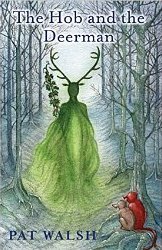
Book Review: The Hob and the Deerman by Pat Walsh

A long time ago, I posted a review for The Crowfield Curse by Pat Walsh. Like, a really long time ago. Like, I think it was the first book review I ever posted. Wait, nope, it wasn't the first—but it was my first solo positive review for a book, all the way back in 2011.

So imagine my surprise and delight when recently the author herself contacted me asking if I'd review her newest book, which happens to be Crowfield-related. It was a lot of surprise. And a lot of delight. I may have looked a little something like this:


Of course I said A;SDKFAD;LFSJ YES OMG YES I WILL DO THIS (only, you know, more coherently) and she sent me the book and I'll say THANK YOU right here and everything else in the review down below.

~*~*~*~

22740115The Hob and the Deerman by Pat Walsh

Pros: Fey and ghosts and monsters; well-researched; has some really beautiful imagery and folkloric atmosphere.
Cons: The ruins and ruination of the ruins in the beginning was very ruinous; wasn't quite sure if the story was ever going to wrap up until the end; I can't really think of a third con to put here so I'm just going to write that I really want to eat some bread and cheese and hazelnuts because that's what the hob was eating all the time in this book.

Intellectual Rating: 8 out of 10 stars
Emotional Grade: A-

Book Blurb: (from Goodreads) In a place where the everyday world and the Otherworld meet, anything can happen...

Crowfield Abbey lies in ruins and a ghostly crawling man haunts the long abandoned rooms and cloisters.

When Brother Walter the hob returns to the abbey, he finds it a desolate, troubled place. The ghost of a young girl waits in vain for her father to come for her. A boggart lurks in the abbey drain, and the statues and wall paintings are disappearing, one by one...

And who is mysterious Deerman of the forest?

With the help of a young village boy and a stone hob brought to life, the hob desperately attempts to unravel old secrets and right an ancient wrong. Time is running out for the hob and it is not always easy to tell your friends from your enemies.

Alz's Take: Actually, now that I've read the blurb above, I have to say that while it isn't exactly misleading, it does make the book sound like an thrilling action-packed adventure. And to be sure, there is action, including but not limited to a creepy-ass ghost-monster thing that crawls around in gray tatters of rag and bone, a boggart that smells really really bad (I mean, he lives down inside the latrines pretty much), and assorted pursuit and escapes involving them.

But really, this isn't a story focused on action and solving mysteries—this is a ghost story about remembrance and the preservation (and sad decay/destruction) of the past, of moving on despite reluctance for what has been lost or left behind, of learning to embrace new things and friends, and above all else, not abandoning friends in need. Action and mystery-solving are aspects of The Hob and the Deerman, but are not the thematic focus. The atmosphere is one of wistfulness, mystery, and hope. It's really quite lovely.

Brother Walter (he's not a monk but was named by a monk, hence the whole Brother thing) is a hob, which is a little catlike/doglike furry fey creature that most people can't see. If you've read the Crowfield books, you'll recognize him; if not, no matter, this book functions well enough as a standalone. The book begins with him searching for a new home since winter is coming and all men must die.


Brother Walter remembers he once used to live by Crowfield Abbey and decides to seek shelter there for now. And then he finds the abbey is in ruins and everybody he knew there is dead or gone or both. He's shocked and saddened as he explores the ruins, and in doing so he comes across not only the ghost of a little girl still waiting for her father to come back for her, but living folk from the local village who have been hired by their (of course despotic and jerkfaced) lord to bring the carved stone blocks from the abbey so he can use them to prettify the fancy house he's building.

There is, of course, a young boy with them. His name is Ned Stark Swyfte.

Eddard Stark does not feature in The Hob and the Deerman.
I don't know why all these Game of Thrones references are popping up
but I swear that this is the last one.
Anyway, Ned can see the hob and isn't afraid of him; they become friends and the hob finds out that the stone carvings have been disappearing from the abbey, and by disappearing, I mean the carvings themselves are vanishing from the stone and leaving a blank surface behind.

Then there's the business of the abbey supposedly being haunted, and what do you know, it is (see earlier note about creepy-ass crawling tattered ghost thing). I have to admit that the mystery about the ghost thing was a little underwhelming in the end but I appreciate that it wasn't overly complicated. Also, I feel like I either missed something when reading or there was an editing error because on p. 84 there is a mention about the ghost girl telling the hob something that I don't remember her telling him, and when I skimmed through the book again, I still couldn't find any mention of this, but it would have given more foreshadowing/context to the crawly creeper ghost.

That one error aside though, the rest of the book is beautifully, sparely written. Descriptions are straightforward but when it really counts, there are some truly evocative lines, especially concerning the Deerman, who is a powerful and mysterious figure. Though about the ruinous ruination of ruins thing I mentioned as a con: the first couple of chapters deal with the hob returning to the abbey and exploring it, and while the passages describing the natural decay and willful destruction of the abbey were poignantly written, they were rather extensive. Fortunately everything smoothed out from there.

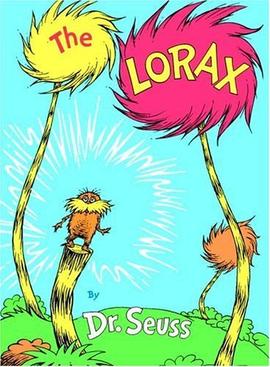
Our hero is Brother Walter is really a great character--at once an old soul and an innocent one, brave and fearful, desiring to live in peace and comfort but willing to sacrifice both if it means doing the right thing.  Despite descriptions indicating that hobs look something both doglike and catlike, for whatever reason I, uh, always vaguely pictured hobs to look like a mix of the Lorax and a pine marten.

+ =
 
Although inaccurate to the text, this is the hob that scurries about in my mind.

The book doesn't have a thrust so much as it does a flow, of Brother Walter discovering things and making connections and helping Ned and the ghost girl and even the ghost pig—yes, you read that right, there is a ghost pig, and she's a nice ghost pig named Mary Magdalene that Brother Walter knew in the past. And no, she's not a twee cutesy ghost sidekick (thank god) or anything or even a major player in this book, she really is just a pig.

Snoozing together.
Anyway, Brother Walter always ends up helping his new friends, because that is what friends do. And yet the narrative doesn't feel pushy or overly sentimental about this; Brother Walter himself doesn't dwell on these things for long, he simply does them, and is puzzled/deferential when people tell him he is brave. And really, he is one hell of a brave little hob. Most of his bravery stems from the fact that he is in fact terrified during assorted encounters but he pushes through to do the right thing without conscious thought—usually. When conscious thought is involved, he goes through some realistic doubts and unbidden thoughts, i.e. Well-crap-this-looks-extraordinarily-dangerous-what-if-I-just-nip-off-right-now-and-leave-these-guys-to-fend-for-themselves-types of thoughts.

The book is short, clocking in at 154 pages, but it's the perfect length. Any longer and things would have dragged on; any shorter and I would have felt cheated. As it is, I wasn't entirely sure if the book was going to wrap up or if there was going to be a direct sequel, because I was getting near the end and there were fewer and fewer pages left—but the buildup came to a satisfying climax, and the ending felt right. While I kind of wish there had been more explanation of certain supernatural elements, any more than what's there might have ruined the balance of mystery.

Alz's Conclusion: The Hob and the Deerman is a novella chock-full of folkloric, mythological, and historical elements, featuring a diminutive hob who befriends those in need and really is braver than he thinks he is. It's a great, charming read whether or not you've read the other Crowfield books. I hope there are more novellas forthcoming featuring Brother Walter.

9.03.2014

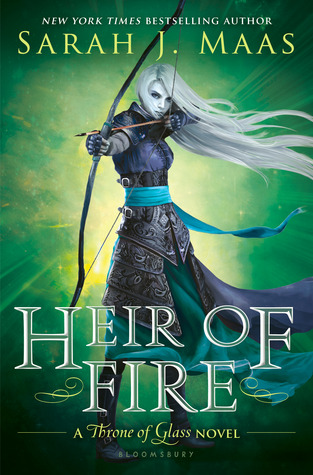
Book Review: HEIR OF FIRE by Sarah J. Maas

It's been a while since our last book review, and that's partly my fault because I'm lazy and reviews (for me) take a long time. Not that I don't enjoy doing them! I do. It just takes a considerable time commitment - what can I say, I'm long-winded and think too much about stuff.

ANYWAY, I was very lucky to have received an e-ARC of one of YA's most popular recent fantasies: HEIR OF FIRE, the 3rd book in the THRONE OF GLASS series. The book is out now (yay!), so you won't have to wait at all post-reading this review.

We did a joint mini-review of THRONE OF GLASS here in the past, and while we weren't particularly impressed with the first installment, we liked it enough to continue the series. I, for one, think it's an entertaining read, and I thought the follow-up CROWN OF MIDNIGHT was a marked improvement from ToG. I didn't review it here, but I did a mini-review of CROWN OF MIDNIGHT on goodreads. (You can also find what I thought of the novellas on goodreads.)

So, here's what I thought about this latest entry into the series!

HEIR OF FIRE by Sarah J. Maas


Disclaimer: I received an e-ARC through Netgalley in exchange for an honest review. I also sometimes interact with Sarah Maas on Twitter (she's a sweetheart).

PROS: Expansive world-building; growing cast of intriguing characters; epic plot starting to really happen; focus on non-romantic relationships; pretty good pacing, especially considering how separated the main cast is and that this is a transition novel

CONS: This being a transition kind of book, the pacing does sag a little at parts; unnecessary number of POVs; kind of meh romance; a diversity/trope issue I'll explain below

Intellectual Rating: 7 out of 10
Emotional Grade: B

Goodreads blurb:
Lost and broken, Celaena Sardothien’s only thought is to avenge the savage death of her dearest friend: as the King of Adarlan’s Assassin, she is bound to serve this tyrant, but he will pay for what he did. Any hope Celaena has of destroying the king lies in answers to be found in Wendlyn. Sacrificing his future, Chaol, the Captain of the King’s Guard, has sent Celaena there to protect her, but her darkest demons lay in that same place. If she can overcome them, she will be Adarlan’s biggest threat – and his own toughest enemy.

While Celaena learns of her true destiny, and the eyes of Erilea are on Wendlyn, a brutal and beastly force is preparing to take to the skies. Will Celaena find the strength not only to win her own battles, but to fight a war that could pit her loyalties to her own people against those she has grown to love?


**Warning: Spoilers for events through Crown of Midnight from here on out.**

REVIEW:

I think this might be my favorite of the Throne of Glass books so far, probably because it finally feels like we're getting into the real story. In many ways ToG was mostly an introduction to the world and characters, and if you look at it, structurally it has the most self-contained storyline - the King's Champion competition. Whereas both Crown of Midnight and now Heir of Fire are books that are driven by how they feed into the series plot.

World-building

Heir of Fire is different from the past two books because it takes us outside of Adarlan, though some of the story does still stay there. At the end of CoM, Celaena was sent to Wendlyn, across the sea where magic still exists. I'd been curious about what Wendlyn's attitude towards the brutal expansion of Adarlan was, and perhaps more importantly, I had wondered what the Fae thought about the banishment of magic in Adarlan and the slaughter of their kin in Terrasen. So it was great to get answers to these questions, as well as just see what life is like in a kingdom un-oppressed!

The other locale we're taken to is up into the mountains where the King has gathered the Ironteeth Witch covens. What we learn here is more about the bigger plot, essentially that the king has wyverns, and we meet a new set of players in the game. The witches and their culture are fascinating with its brutality, yet strict governing system. I loved Manon Blackbeak - a new character who is obviously going to be integral to the series plot in the future - and her Thirteen.

New Characters

The new characters introduced in this installment were very intriguing, and they add layers to the dangerous game that's being played. Although, I will say that I don’t think all the POVs we got in this volume were necessary. As I mentioned above, I loved Manon Blackbeak and her Thirteen. I think the Witch Clans will definitely be something of a wildcard element to the series arc that's being spooled out, and while I didn't find this POV superfluous, it is the most tangential of the main stories being played out.

Other new characters, Aedion and Ren play roles that are more straightforward, but they definitely upped the tension in regards to what is brewing in Adarlan and Rifthold. I enjoyed the addition of the Fae warrior prince Rowan. Not only did he give us a glimpse of what the Fae are like and what controlled magic looks like, he gave Celaena the kind of tough love that I think she needed. He also was one of the more intriguing new non-romantic relationships introduced in this book. I'm very curious as to how he will fit into the series plot moving forward.

Old Characters

There wasn't as much Dorian in this book, which was sad for me (since I love him), but it made sense considering how his role has been diverging from Chaol and Celaena’s since the last book. He has his own problems to deal with, and given what he doesn't know, it's hard for him to be involved with the bigger arc. That isn't to say he's been side-lined because where this book takes him is, well, it's not pretty and it certainly has me waiting with bated breath as to what will happen next.

Chaol too has a tough time in this book, more so than Dorian because he's a man torn between his loyalties to his friends, country, and family. I did not envy his position, but I was pleased with how he has been forced to really examine his beliefs and feelings. His world get shaken up in this one too.

Last but not least, our MC Celaena Sardothien! It was great to see Celaena explore the magical and Fae part of her heritage now that it's out in the open about who and what she is. I do wish (as I have in other books) that Celaena gave more indication of what was going on in her inner life. I understand that she's spent 10 years repressing her memories and that hiding her past is how she has survived - and I also understand the concept of unreliable narrators and having to keep plot information from the audience - but it still (even in this 3rd book) strikes me as odd the way Celaena doesn't seem to internally acknowledge or react to potentially triggering stimuli (other than in maybe the vaguest of terms) until the story calls for it.

The example I always come back to is her fear of the king. In one of the last novella prequels to ToG, she suddenly expresses knee-wobbling fear of the King of Adarlan. Yet the first time I am aware of any kind of visceral fear from her is this moment in the last novella, despite Celaena's having lived lived in the Capitol city within sight of the Glass Castle for the past decade and having to think about and/or talk about the king at least in passing. I guess, for me, when a character seems that afraid of someone/thing, it's weird when they give no indication of it... until the plot absolutely calls for it.

Anyway, that personal nitpicky feeling aside, I do appreciate that this book was about Celaena finally facing her inner demons and coming to terms with both her failures (perceived and otherwise) and her responsibilities. She frustrated me at many turns, but I also felt for her and understood why she didn't want to accept certain things and why she kept running away. In my mini-review of ToG, I said I felt like I knew Celaena only on a shallow level, but in this book, she's finally starting to feel more real to me.

I think Maas did a good job making Celaena believable, and though there were many times I wanted to shake her or yell at Celaena, I was still waiting and hoping for her to pull through. I didn't want her to fail, and I think keeping people on the side of frustrating characters is a feat in and of itself for authors.

Pacing

This book is very much a transition book, so there's not real driving plot. It's mostly character arcs and laying the groundwork for the series plot-line. That isn't to say there isn't a mystery and some action set-pieces. There is - with Celaena's story being rightfully the meatiest. I think the various threads we're given help keep the tension and the pacing up.

But it is a long book, so I think there are some sections that run a little slower than others. It also depends on what interests you as a reader. I've seen some people say the witch sections are the slow sections since they have the least to do with everything else, but I found the witch politics, Manon, and the wyverns captivating. On the other hand, I found the Sorscha (another new character) POV sections a bit pointless. Her role in the story is important, but I wasn't sure if she needed a point of view - though it did lend a bit of sweetness to an otherwise darker book.

One gripe: Trope

This gripe isn’t a deal-breaker and I obviously don't think it was a trope that was planned, but I do think it’s important to note. Given Nehemia’s fate in the last book, I was not happy with the way Sorscha’s story line went because taken together, these two characters fall into a very common trope that happens to characters of color in fiction. They can be great characters -beloved characters- but ultimately, the role they serve is to further the plot and/or character arcs of the white protagonists.

Sorscha is one of the new characters introduced in this book, and the only one who sounds like a non-white character (at the very least, she has darker skin). (Yes, I know, some of the new characters are witches and Fae and whatnot, but they’re all described as pale-skinned, pale-haired, and exotic-eye colored - which will be interpreted as white-looking first.) She has a POV and plays a pretty important role, but when it comes down to it, the only real purpose she serves is to further the story and character arc for Dorian, and on a smaller scale for Chaol and the series storyline.

(Picture references for Sorscha from Maas' ToG pinterest board.)

I get that all supporting characters are basically there to forward the story for the MCs, but Sorscha seriously is a love interest and a plot point and that's it - which is why I found her POV sections kind of unnecessary (short and infrequent as they were). Anything we learn from her POV could easily have been transmitted through other characters or methods. And it would be fine if supporting characters are just there to support, but it falls into problematic territory when it's only the non-white characters who occupy this category without becoming anything else (Nehemia seemed to have more going on, but Sorscha is firmly in the supporting character - and not really much else - category).

This isn’t to call out or condemn this book series or anything. It’s just to point out a common but problematic trope in story-telling media at large. To give you another good, recent example, the wildly popular Hunger Games does this too with Rue (specifically in the movie, where Katniss loses the racial ambiguity she had in the book). She was a memorable and well-liked character, but more importantly, Katniss liked her. In the end though, her role in the story was to help Katniss not only survive the Hunger Games but to start becoming a symbol for the rebellion. Her friendship with Katniss is what made Thresh save Katniss’ life later in the Games. Her death drives home the brutality of the Capitol and the Games to Katniss and to the reader. It inspires Katniss’ acts of defiance, which in turn stoke the fire of the rebellion. The most important thing about Rue is not even what she stood for (i.e. innocence) but what she does for Katniss.

And that’s what sucks about both Nehemia (who I think was a great character) and Sorscha. They are basically the two most important characters of color in this series to date (all other dark-skinned people mentioned are the nameless people of Adarlan conquered nations), and this is what they do for the story.

*Highlight the section below for Crown of Midnight and Heir of Fire spoiler*


And out of the growing cast of characters, the two named women of color are the ones who get fridged in service to the plot and angst of the protagonists (who are white). I mean, even typical “mean girl” Kaltain from Book 1 is alive and out in Erilea somewhere, likely to re-emerge in a big way in later books! And I don’t know if I find it ironic or just plain troubling that Nehemia herself thought -within the story!- that she would be of more use to the rebellion (and Celaena) dead than alive. That’s like the trope incarnate - plotted and executed by the character herself!


So that’s disappointing, especially since I think the ToG series does a lot of other cool things (e.g. focus on female relationships, platonic relationships, badass heroine who is also very feminine). There are 3 more books in this series though, so I only hope that we get more non-white looking people who actually, you know, stick around and get to be part of the story in the way I had hoped Nehemia would be part of it or in the way Manon is obviously going to be part of it.

CONCLUSION:

Overall though, I think Sarah Maas outdid herself in this installment. I think she improves with each book, and I love that the world keeps expanding and feeling more real as we see more of it. And again, I still think this series is a great, accessible way to get into the Fantasy genre for casual and new fantasy readers.

When Celaena's plot for this book came to a close, it had me wishing I had the next one. In fact, the place where Maas leaves the main characters has me so, so excited for the next book. Yes, this volume was more like a bridge to the real story, but it sets up so many intriguing things. Decisions have been made, people are in very different places from where they started. Very much looking forward to the next!

P.S. Chat me up for book discussions when you've finished reading this because oh my gooooooood.

5.28.2014

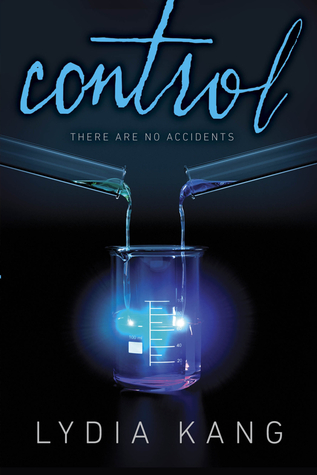
Book Review: CONTROL by Lydia Kang

This review has been long in coming, especially since I read an ARC for Control back at the end of 2013 a month or two before the book released in December 2013.

Anyway, I did always mean to write something, especially since the author, Lydia, is one of our first online-blogging friends. It also seems appropriate now to highlight a book by an Asian American author in light of the We Need Diverse Books campaign and because May is Asian-Pacific American Month.

So, here we go!

CONTROL by Lydia Kang


Disclaimer: Borrowed the ARC from a friend, and as I mentioned above, we are online friends with Lydia. So, we like her a lot, but this review will be fair and honest to the best of our abilities.

PROS: Interesting world building; intriguing cast of characters; actual science in the science fiction; development of different kinds of relationships (familial, romantic, platonic, etc.)

CONS: Pacing plateaus for a bit; heavier subject matter insufficiently addressed; standard "bad guy" villain(s)

Intellectual Rating: 6/7 out of 10
Emotional Grade: C+

Goodreads blurb:
When a crash kills their father and leaves them orphaned, Zel knows she needs to protect her sister, Dyl. But before Zel has a plan, Dyl is taken by strangers using bizarre sensory weapons, and Zel finds herself in a safe house for teens who aren’t like any she’s ever seen before—teens who shouldn't even exist. Using broken-down technology, her new friends’ peculiar gifts, and her own grit, Zel must find a way to get her sister back from the kidnappers who think a powerful secret is encoded in Dyl’s DNA.

A spiraling, intense, romantic story set in 2150—in a world of automatic cars, nightclubs with auditory ecstasy drugs, and guys with four arms—this is about the human genetic “mistakes” that society wants to forget, and the way that outcasts can turn out to be heroes.

-----
Even though science fiction is not an easy sell for me (it takes some convincing for me to venture into the genre), I looked forward to this book. The premise was promising, and knowing Lydia's background in medicine, I was curious to see how that knowledge would translate to the future-science of the world of CONTROL.

On that front, the book is a success. The few YA scifi books and many more sci-fi-flavored books (e.g. all those dystopians) I've read have more often than not given me pause when it comes to the more science-y aspects of their world-building or plot points - and this despite my not being a science geek myself. Sometimes, science-based explanations or plot points would make me question their plausibility and logic. Not so with CONTROL! It was cool to have that solid scientific basis for the plot points and world-building involving mutations and gene manipulation. Plus, the science actually felt like an important part of the book instead of just window dressing. Like plot-related science aside, I loved how Kang showed how scientific and technological advances might affect other aspects of society - like entertainment! She gives us downloadable scents and night clubs with special rooms just for experiencing specific kinds of sensations - thanks to the help of airborne drugs. The club scene is one of the most dynamic and delirious sequences in the book! Kang takes "feeling the music" to another level.

Speaking of science and geekery, it was cool too to have the main character Zelia be really into science. And it was nice that the text shows us that. Zelia clearly knows her stuff, and the way she reacts to being in a lab and the way she describes things (and even her jokes) show us that this is her passion. Yes, some of the science-based descriptions or jokes were a little corny, but I liked them because I think it gave Zelia character and even she was aware at her nerdiness.

This does bring me to one of the bigger issues I had with the book though, and that's also Zelia. Generally, I like her! Like I said, I love that she's smart and passionate about science. She's also protective of her family, and I really appreciated that her main emotional motivators in Control have to do with her sister Dyl and her father. But I had trouble fully connecting with her, despite her obvious distress over her sister's well-being and her admirable tough attitude when it came to the many changes in her life. I think it didn't help that while Zelia's main drive is to save Dyl, I don't really know Dyl well enough. Much like Prim in the first Hunger Games book, Dyl is almost more a symbol (of innocence, family) than an actual person. The sisters don't have much time together before they're separated, and we don't learn much else about her, other than that she's beautiful and sweet and naive.

I think another factor to my detachment from Zelia was her kind of unclear character arc. Like I could see the direction the plot was going and Zelia does have a host of insecurities, but at the end of the book, I couldn't really tell you what Zelia's character arc actually was. Self-acceptance/ confidence? Sure. Learning to open up to people, I guess? Though Zelia learns things, she also somehow felt stagnant. But this could just be me (sometimes, you just don't click with someone) and with what she's gone through and where the book ends, I am curious to see how Zelia grows in the next book.

The supporting cast, Zelia's new friends at Carus House, was a fun group. I enjoyed learning about each of their genetic modifications and about each of them as people. I know some readers will be disappointed that the genetic modifications don't necessarily grant showy, almost magical levels of powers to the group, but I kind of found that refreshing! Yes, these teens have extreme physical modifications and/or weird abilities, but it's kind of nice to see people like this not be conveniently normal looking or have "super powers" like mind-reading or laser eyes. Of the supporting cast, I particularly liked Vera, the confident, green-skinned bombshell of the group who starts off seeming like a "mean girl" but ultimately isn't. I loved her fierceness and sass.

Unfortunately, I can't say that about the antagonists of this book. We meet a few members of the opposing Areus House, and while their special abilities are interest-piquing, their personalities don't make too much of an impact. There is one character (who I won't name so as not to spoil you for anything) who does make an impression, but it goes from intriguing to creepy and kind of one-dimensional. I suspect we'll learn more about Areus House in CATALYST (Control #2), but as it stands in this first book, everything about the place hits the one note of "evil/bad." I don't need all my villains in all my media to have a lot of depth or shades of gray, but I do usually want a little more than this. I'm kind of like why are they so shady? Is their whole deal really just greed, etc.?

I'm going to mention my more minor issue with the pacing now before I get into the last bigger issue I had with the book. Overall, the pacing was fine. Things happen quickly enough, but they do plateau once Zelia gets to Carus House. This was okay though because Zelia was learning about herself and her past and discovering things about her new friends. So it doesn't drag per se, but I did find myself wondering when the next big plot event would happen eventually.

Now the last bigger issue I wanted to mention was that part of the plot has to do with heavier subject matter that is sexual in nature. Much of it is described in vague terms and/or implied, and the bad things are absolutely condemned by the text and treated as traumatic experiences within world. But the thing is, I didn't feel like this really messed up stuff was sufficiently addressed. It's kind of like "This is a bad, bad thing. These are bad, bad people for doing it," but it almost feels like the gravity of what has been perpetrated (and some of these things on young characters) isn't quite there. Like I expected the characters to be more outraged, but maybe this is not that out-there-despicable to them? Basically, for something so serious and seemingly horrible to me, it didn't seem like the characters felt the same way and/or they didn't feel like this needed further discussion.

So as you can see, I did have a few big issues with the book, but I liked quite a bit too. I liked it enough to want to read the next book and see where all of this goes. The world Kang has built is definitely a curious one, and it's definitely one of the more scientifically sound ones I've read. It is a promising debut with a generally fun, diverse cast and some good plot twists too!

So if you like science-y, fierce girls and real science in your Science Fiction, I recommend you give CONTROL a try! And if you like it, be on the lookout for the upcoming sequel CATALYST.

5.09.2014

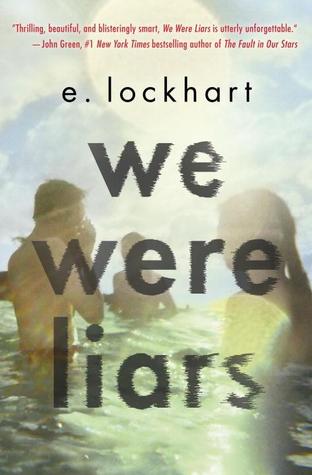
Book Review: We Were Liars

This upcoming Tuesday, E. Lockhart's much buzzed about book WE WERE LIARS will be available for purchase. You might have heard the title and seen tantalizing but ultimately vague reactions and descriptions of the book. I understand this is frustrating.

It was frustrating to me too, though it also did catch my attention and pique my interest. The very nicely put-together We Were Liars Tumblr can give you a better idea of what you're getting into.

But the site itself instructs us to lie about the book's contents.


I won't lie to you, but I won't tell you the whole truth either. To do so would be a disservice to your reading experience. You know how there are some books, some movies, some stories where you're better off going in knowing as little as possible? This is one of them.

I was lucky enough to get an e-ARC from Netgalley for it a month or two ago, and it's taken me that long to figure out a way to review this thing without letting too much slip.

Disclaimer: Received an e-ARC from publisher through Netgalley in exchange for an honest review.

PROS: Vivid prose; strong voice; nuanced character conflicts; atmospheric; clever structure

CONS: Story occasionally meanders; sometimes felt detached from the characters; writing style/structure might bother some people

Intellectual Rating: 8 out of 10
Emotional Grade: A-

Goodreads blurb:
A beautiful and distinguished family.
A private island.
A brilliant, damaged girl; a passionate, political boy.
A group of four friends—the Liars—whose friendship turns destructive.
A revolution. An accident. A secret.
Lies upon lies.
True love.
The truth.
We Were Liars is a modern, sophisticated suspense novel from National Book Award finalist and Printz Award honoree E. Lockhart.

Read it.
And if anyone asks you how it ends, just LIE.

From a "plot" standpoint, the book focuses on Cadence Sinclair Easton and the distinguished Sinclair family. It's about her coming of age - falling in love, becoming aware of her privilege, growing frustration with her family - but it's also about Cadence's realization of the dysfunction that exists beneath the shining image of the Sinclair clan that the world sees. Cadence spends every summer on the Sinclair's private island with her cousins and her cousin's friend. Together, they form a group called the Liars. The book is also about one particular summer they spend together.

First, I have to say that E. Lockhart's prose is just gorgeous. The writing is spare but lovely and so vivid. She quickly and effortlessly paints a picture of the Sinclairs and their island, of the carefree summers playing by the shore, of the family's magazine-perfect blue blood lifestyle. She creates an almost dreamy quality to Cadence's recountings, but she's also careful to reveal the many cracks beneath the dream, the countless microaggressions the family members inflict on each other that have built up over the years. Cadence's voice is distinct and sometimes lulling (I did feel a bit detached from her as a character, but she herself is struggling with detachment as well), but it will draw you in and hold you in a kind of spell.

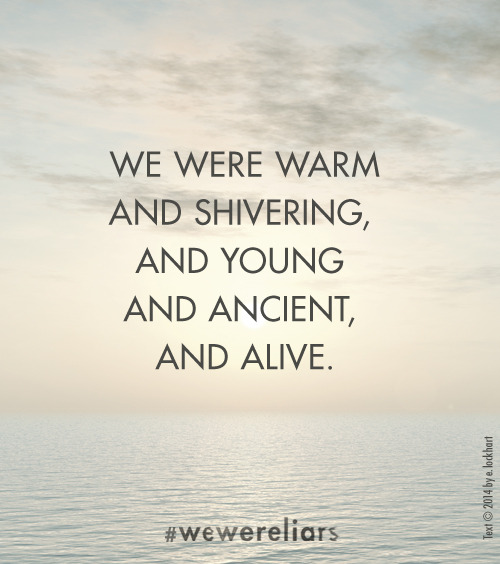
Photo: We Were Liars Tumblr / Text (c) E. Lockhart  #wewereliars

If you like reading Contemporary, the story gives you more than enough to chew on. You have first love, budding teenage rebellion, family drama. There's some political disputes, inheritance issues, personality clashes. The novel is structured in an unconventional way with short chapters and jumps from the present to the past, and it's never quite clear where exactly the book is going in the first few chapters of the book. While I ultimately found this structure effective, it did make the story feel like it meandered at times. And while the problems faced by Cadence were understandable and easy to sympathize with, it did make me feel at times like "But these are still rich people, first world problems."

The good thing is even these parts served the story as a whole. The meandering plot helped set the mood of timelessness and created the "magical" quality of Cadence's summers on the island. It also kind of mimicked, I think, the often non-linear and easily distracted nature of memory and recall. And while many of the Sinclairs' problems stem (at least partly) from their extreme privilege, we're shown how these conflicts affect the characters at the personal level and how none of the drama is simple or easily solved. I don't think the story paints money as the root of the problem so much as it shows the reader how trapped any of us are within the cages of our personal and familial narratives.

What was it that Leo Tolstoy wrote about families?

"Happy families are all alike; every unhappy family is unhappy in its own way."

Which leads me to themes. If you've been here long enough, you'll know that I'm a girl who loves a well-executed theme or two in books. WE WERE LIARS is full of them: memory, love, grief, family, narrative.

We are all stories, and for prestigious families like the Sinclairs, this might be even truer because they tend to have such elaborate family histories, myths even. WE WERE LIARS explores what happens to people who have strong familial narratives that are entrenched in its members. Cadence and the Liars are at the age where they're realizing just how their family's image of itself can and have affected them; they're starting to see how it affects the adults too. E. Lockhart cleverly has Cadence use fairy-tales and other well-known stories as framing devices for the broken narratives and parts she has come to recognize in the Sinclair clan.

The story also explores different types of love, and in keeping with the family theme, it shows how love and loyalty can in some ways be both binding and destructive and healing and freeing.

And then there's the theme of memory, linked with the story-telling aspects of the book. How reliable is it? What are the things you remember about the people you love? What are the images you form and keep? Is any one version of a memory or story more true than another?


There's not much more I can say. WE WERE LIARS is a great book for studying voice and how to build a slow burn. It's nuanced and a little unresolved, which I liked because life is messy and unresolved. And yet, it's not un-hopeful. This is a story that lingers.

So I recommend you pick up the book and meet the Sinclairs. When you're done, I'd love to chat about the truth. But if anyone asks you about how it all unfolds, remember: just lie. (The truth is meant to be discovered.)

9.25.2013

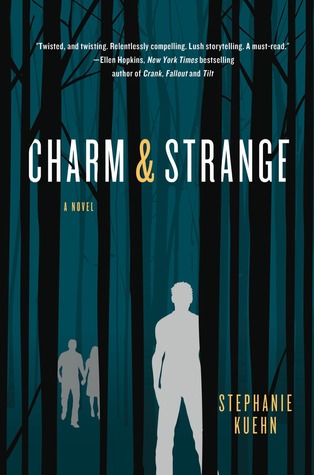
Book Review: Charm & Strange

It's been a while since we had one of these, but I have been reading a lot (for me) and it is appropriately Banned Books Week in the U.S., during which we talk about the importance of books and reading and the dangers of banning them.

[Illustration/ mine]
This book is new (debut from earlier this year) and as far as I know it hasn't been banned, though I could see that it might be given its dark content. I meant to review it ages ago, but life was busy and I needed some time to think on it. In any case, it is a short, powerful book that I think is worth the read.

CHARM & STRANGE by Stephanie Kuehn

Disclaimer: Received an e-ARC from publisher through Netgalley in exchange for an honest review.

PROS: Taut plotting; engaging voice; deft use of metaphor and magical realism

CONS: Dual narrative structure takes a little getting used to; supporting characters aren't as fleshed out

Intellectual Rating: 9 out of 10
Emotional Grade: A-

Book Blurb (from goodreads): When you’ve been kept caged in the dark, it’s impossible to see the forest for the trees. It’s impossible to see anything, really. Not without bars...

Andrew Winston Winters is at war with himself.

He’s part Win, the lonely teenager exiled to a remote Vermont boarding school in the wake of a family tragedy. The guy who shuts all his classmates out, no matter the cost.

He’s part Drew, the angry young boy with violent impulses that control him. The boy who spent a fateful, long-ago summer with his brother and teenage cousins, only to endure a secret so monstrous it led three children to do the unthinkable.

Over the course of one night, while stuck at a party deep in the New England woods, Andrew battles both the pain of his past and the isolation of his present.

Before the sun rises, he’ll either surrender his sanity to the wild darkness inside his mind or make peace with the most elemental of truths—that choosing to live can mean so much more than not dying.

REVIEW

Charm & Strange is indeed both of those things - charming in a mesmerizing, gripping kind of way and strange. For a relatively short book, it is powerful. It's dark, tense, psychological, and full of voice.

It's hard to review this book in part because it is something of a mystery, and to say anything of substance would be to give away the reveals. And part of the power of this book is how we come to the revelations, how the revelations ripple back to what we've seen happen in the story, and how those revelations affect the Win of the present.

The chapters are split between the present (Matter) with Win and the past (Antimatter) with Drew (the name he used before he became known as Win). The Present chapters and Past chapters each move forward in their own narratives, but they are put at the perfect pace so that each Past chapter reveals something about what is happening to Win in the Present. Both narratives are populated by their own set of characters - the common denominator being Win/Drew - but you can tell everything is intricately tied together. When you look at the story by the end, it's actually quite straightforward in a plot sense - there are no real subplots - but the clever interweaving of the chapters and the use of magical realism is what keeps you guessing. And it doesn't feel like a trick, like the odd structure was a means to keeping the reader in the dark. I thought it was actually a very effective way of showing us the confusion and change Win was going through, how complicated memories and perceptions can be.

I mean, the first line of the book blurb is: "Andrew Winston Winters is at war with himself" and the split narratives illustrate this struggle in an organic way. So, it is a brilliant structure choice!

It is also astonishing how tightly plotted and well-paced this book is, especially considering that this is Kuehn's debut. Another fantastic part of this book? The voice and atmosphere!

The voice is what grabbed me from the beginning and didn't let go. I wasn't sure what to expect from this book, and for the first few chapters, I still didn't know where it was going. Then I stopped caring about the where because Win/Drew's voice was so distinct, so clear. Here is such an odd and not really likeable boy: so tightly wound, angry, lonely, and even afraid despite his coldness (in the present) and his violence (in the past). Though his personality seems a bit different between the past and present, his voice was recognizable as his own in both. He captivated me, made me curious and invested in his story.

UK Cover of Charm & Strange
And the atmosphere in this book was perfect. It evoked beauty, darkness, fear, and tension. The many woodland scenes were at once idyllic and ominous. The mood easily shifted from the realistic (e.g. the drunken antics of teens at a campfire party) to the surreal (e.g. running through the woods under the moonlight), and that lent itself to the mystery of Win/Drew's past at the heart of this novel.

One more thing I really loved about this book was the use of extended metaphor and motifs. They aren't overdone or overbearing, and I thought one of the metaphors was particularly appropriate to the themes of this book. I can't say more or I'll ruin it for you, but it is so appropriate. For the motifs, I loved the juxtaposition of Win's interest in the hard sciences (where the title and chapter titles come from, and which also lends itself to reinforcing Win's journey) to this shifting, paranormal-tinged depiction of his internal, personal struggle. I think also the juxtaposition of the unruly and abstract nature of this story to Kuehn's controlled prose and pacing serves to further the tension and dread while highlighting Kuehn's discipline.

The only slight bumps in the book I could mention is that the dual narrative does take a bit of getting use to and the other characters are very much supporting characters. It's not jarring per se, but it is like starting two different stories at once since the narratives run parallel to each other. It also makes it a bit hard to grasp the passage of time because the MATTER (present) story line takes place mostly over the course of a day/night, whereas the ANTIMATTER (past) story line jumps from incident to incident and then covers one fateful summer. The other thing is that while there is a cast of characters - particularly Win's two friends and Drew's brother and various other family members - there isn't too much of them. But while they are painted in rather broad strokes, there is a realness to them that makes it okay, and anyway, the story is very much Win's.

Kuehn draws a very complex portrait of a boy who is struggling with loss, grief, identity, trauma, and survival. The themes and what the story is really about only become truly clear at the end, and it is a heartbreaking, powerful revelation. I don't think you'll know how well-constructed Win's character and story is until then.

This is a very potent piece of magical realism, a book that blurs perception as much as it blurs the past and present, the real and fantastical. It is a dark, difficult story but it also has a lot of hope and heart. I look forward to anything Stephanie Kuehn writes in the future.

Similar suggested reads: Nova Ren Suma's 17 & Gone

6.19.2013

Two Mini Book Reviews: 100 Cupboards & Mortal Engines

Finally got my reading kick back on with some fresh and random library reads, priming me for getting back on track with all the books Krispy's been nagging me to read along with sundry others!  In the meantime, since I've been reading so much and haven't totally hated everything (I know!  What a rarity!) I thought I'd post a couple mini reviews here.

~*~*~*~

100 Cupboards  (100 Cupboards, #1)100 Cupboards by N.D. Wilson

Pros: Interesting worldbuilding; once plot gains momentum it moves quickly; adoptive family is generally kind, fairly rounded-out, and interesting.
Cons: Slow and meandering in the first third; clunky writing in the beginning; protagonist's parental dynamics are largely glossed over despite looming tragedy.

Intellectual Rating: 6 out of 10 stars
Emotional Grade: B

Book Blurb: (from Goodreads) Twelve-year-old Henry York is going to sleep one night when he hears a bump on the attic wall above his head. It's an unfamiliar house—Henry is staying with his aunt, uncle, and three cousins—so he tries to ignore it. But the next night he wakes up with bits of plaster in his hair. Two knobs have broken through the wall, and one of them is slowly turning...

Henry scrapes the plaster off the wall and discovers doors—ninety-nine cupboards of all different sizes and shapes. Through one he can hear the sound of falling rain. Through another he sees a glowing room—with a man strolling back and forth! Henry and his cousin Henietta soon understand that these are not just cupboards. They are, in fact, portals to other worlds.

100 Cupboards is the first book of a new fantasy adventure, written in the best world-hopping tradition and reinvented in N.D Wilson's own inimitable style.

Alz's Mini-Take: Picked this one up on a whim based on the title and blurb at the library.  The writing was pretty clunky and simple right from the start, but quickly smoothed out; unfortunately, the same cannot be said of the narrative.  The story drifted aimlessly a long for a good chunk, focusing more on Henry's adapting to life being adopted by his aunt and uncle and dealing with his three girl cousins and worrying about having never played baseball than anything promised by the blurb.

As for that one con mentioned above, about the glossed-over parental dynamics, it's because (not really a spoiler because it doesn't matter and is mentioned in the very beginning) Henry's parents were on a business trip in Columbia and were kidnapped/disappeared.  Because of this, Henry was sent to live with his aunt and uncle--and yet curiously only ever feels some token sadness/vague emotion/thoughts about his missing parents who might or might not be dead or being held for ransom.  The book hints at the fact that Henry was never close to his parents because presumably they were off traveling all the time, but there's never any real focus on it; I received the impression that the only reason they were kidnapped was so that Henry could move into the mysterious 100-cupboarded house.

Nevertheless, once the book picked up (which was sometime after the cupboards made their appearance), it moved along quickly.  Henry begins to have second thoughts about exploring and poking around these magical cupboards, especially since one of them in the lower corner gives him the creeps--and later, creepy things start happening involving said cupboard.  This is compounded by the fact that he's sleeping in the attic literally within arm's reach of the cupboards, in a small closet-sized "room" of which the cupboards make up one wall.

Not to mention one of his cousins finds out about the cupboards and begins demonstrating childish careless stupidity about them--surely Henry's just imagining creepy things or else is just a chicken and doesn't want to explore.  She takes matters into her own hands with predictably terrible consequences, and things devolve from there.

Despite the shaky beginning, I enjoyed this MG book with its combination of slice-of-life and fantasy-adventure, and would read the sequel.  The plot-hints at the end of the book are basic but tantalizing, and I'd like to know more about Henry and the cupboards and the history of the house.

~*~*~*~

Mortal Engines (The Hungry City Chronicles, #1)Mortal Engines by Philip Reeve

Pros: Imaginative worldbuilding; non-exoticized minorities in important roles; a few astonishingly epic scenes.
Cons: Not very deep on character; some plot points were a bit meh; book was generally a bit light/shallow.

Intellectual Rating: 5.5 out of 10 stars 
Emotional Grade: B+

Book Blurb: (from Goodreads) "It was a dark, blustery afternoon in spring, and the city of London was chasing a small mining town across the dried-out bed of the old North Sea."

The great traction city London has been skulking in the hills to avoid the bigger, faster, hungrier cities loose in the Great Hunting Ground. But now, the sinister plans of Lord Mayor Mangus Crome can finally unfold.

Thaddeus Valentine, London's Head Historian and adored famous archaeologist, and his lovely daughter, Katherine, are down in The Gut when the young assassin with the black scarf strikes toward his heart, saved by the quick intervention of Tom, a lowly third-class apprentice. Racing after the fleeing girl, Tom suddenly glimpses her hideous face: scarred from forehead to jaw, nose a smashed stump, a single eye glaring back at him. "Look at what your Valentine did to me!" she screams. "Ask him! Ask him what he did to Hester Shaw!" And with that she jumps down the waste chute to her death. Minutes later Tom finds himself tumbling down the same chute and stranded in the Out-Country, a sea of mud scored by the huge caterpillar tracks of cities like the one now steaming off over the horizon.

In a stunning literary debut, Philip Reeve has created a painful dangerous unforgettable adventure story of surprises, set in a dark and utterly original world fueled by Municipal Darwinism -- and betrayal.


Alz's Mini-Take: I've seen this book touted as YA but having read a lot of YA and a lot of adult fantasy, I'd have to say this falls more definitively into the adult fantasy category.  The characters are in their teens, but I thought they were around 13-14 from the way they acted and due to the simple narrative style; it wasn't until over halfway into the book that I read bits indicating they were at least 15 and likely a couple years older.

Most of the themes that characterize YA are not present here, i.e. coming of age (not really), first love (it's there but it's not really developed or a focus), search for identity (not to any depth), struggle for acceptance (again, not really), etc.  Mortal Engines is all about worldbuilding and plot--characters are more vehicles for the plot and less than oceans of depth and deep character development, but since the book isn't aiming to be a character-driven piece, Tom and Hester are fleshed out enough to serve their purpose.

The worldbuilding was fantastic though, with a beautiful balance struck between details for realism and letting your imagination do the work--which is quite a tricky balance when you're writing super-futuristic post-apocalyptic steampunk.  In other books, I'd be hung up on details that were supposed to give a sense of realism but did not realistically make sense; here, I was able to swallow the notion of steam-powered tank-treaded cities traveling around and eating other traveling cities for their resources.  Municipal Darwinism?  I'm there, baby.

The plot was good enough, with a few twists thrown in and generally enough setup that things didn't come out of nowhere.  There were a few pretty spectacular action scenes and with Tom and Hester's part of the story, the book trotted right along.  On Katherine's side though the book dragged because most of her early chapters are about her marching off to do sleuthing and actually not ever succeeding much.  Once the shizzle began going dizzle, things became more interesting.

I was also glad to see that there was an Asian woman who is essentially a sky pirate and yet was not exoticized or molded from stereotypes like Dragon Lady or Delicate Blossom (ignore the fact that her nickname in her home city is Wind Flower).  Anna Fang is a powerful and deliberate woman in her own right, classy and courteous, and willing to fight for what she believes in.  Alz approves.

As for more non-stereotypical female characters, there is Hester, whose face is hideously disfigured.  It was a terrible wound that didn't heal right and it shows, and when Tom first sees her it horrifies him and makes him physically ill; Hester herself is well aware that she is no beauty and takes refuge in anger and solitude.  Their blossoming friendship and possible romance is one of the few character things the book actually works to develop, as Hester isn't likely to express gratitude for anything and remains abrasive, but eventually is able to apologize, and Tom has to struggle with whether or not he should like and support her considering that he thinks she's a terrorist at worst and an attempted murderer at best.

Mortal Engines was a character-light but generally entertaining action-adventure book, and I'd read the sequel if I noticed it in the library.

~*~*~*~

In general, I've been liking my latest random library haul or at least not hating anything.  I also realized that I haven't read much MG or big people books lately.  There are a good many more reviews on my Goodreads page as I tend to post my gut-reaction just-finished-this-book probably-has-some-typos impressions there, which are then occasionally condensed and/or expanded and regurgitated here in either mini- or full-length reviews.

Got any fantasy/steampunk/scifi MG or big people book recs?  I realized that I rarely ever poke my nose into the MG section since it's all the way on the other side of the library, but I perused the area last time and picked up some good stuff, but other than tried-and-true read-and-loved childhood favorites, I've no idea what's recent and good!

4.24.2013

Book Review: The Summer Prince by Alaya Dawn Johnson

This is a review a long time in coming, but it's one that had to be done because I think this book is surprising in how complex and ambitious it is - and how well it pulls it off! Lucky for you, it's been out since the beginning of March. Get reading!

THE SUMMER PRINCE by Alaya Dawn Johnson

Disclaimer: Received an e-ARC from publisher through Netgalley in exchange for an honest review.


PROS: Superb world-building; complex characters; deep themes

CONS: Plot pacing / set-up; meandering First Act

Intellectual Rating: 8 out of 10
Emotional Grade: A-

Book Blurb (from goodreads): A heart-stopping story of love, death, technology, and art set amid the tropics of a futuristic Brazil.

The lush city of Palmares Três shimmers with tech and tradition, with screaming gossip casters and practiced politicians. In the midst of this vibrant metropolis, June Costa creates art that’s sure to make her legendary. But her dreams of fame become something more when she meets Enki, the bold new Summer King. The whole city falls in love with him (including June’s best friend, Gil). But June sees more to Enki than amber eyes and a lethal samba. She sees a fellow artist.

Together, June and Enki will stage explosive, dramatic projects that Palmares Três will never forget. They will add fuel to a growing rebellion against the government’s strict limits on new tech. And June will fall deeply, unfortunately in love with Enki. Because like all Summer Kings before him, Enki is destined to die.

Pulsing with the beat of futuristic Brazil, burning with the passions of its characters, and overflowing with ideas, this fiery novel will leave you eager for more from Alaya Dawn Johnson.


REVIEW


It has been over a month since I finished reading this book and I’ve been trying to think of a way to coherently review it since. This book is ambitious, complex, and challenging and I find I’m still not up to the task of describing what exactly about this book made it leave such a strong impression on me.

Worldbuilding

The story is set in breathtaking post-apocalyptic, futuristic Brazil. June’s Palmares Três is a vibrant blend of future-tech, new government, and old tradition. It’s a study in contrasts: a shining city in a war-ravaged landscape; a progressive society where gender-identity and sexuality is fluid and women rule but where the status quo of the upper class is protected and tradition still holds importance; a once-utopia that was nevertheless built on blood sacrifice and maintains the separation of rich and poor in the city’s tiered structure. It was wonderful learning about Palmares Três through June’s eyes because it is a city she loves and one she begins to truly understand over the course of the book.

From the potent stench of the Verde to the blue of the sea to the little lights glowing under June’s skin, the descriptions are lush and vivid, completely immersing you in the world. The worldbuilding is logically threaded through the society and the characters. For example, Palmares Três is governed under a matriarchy and has been for centuries. As a result, gender roles are switched: June remarks that she never cries, but that it was okay for her male friend Gil to do so because that’s expected.

Characters

The characters are also complex, interesting beings. Our heroine June is hard to like but that’s because she’s a multifaceted teenager going through a huge transformation in her life. She’s artistic, talented, confident, ambitious, brave, selfish, judgmental, a bit of a loner, and it soon becomes clear (even to her) that she’s a little naive and immature. Her relationship with her mother was particularly interesting to me because the rift between them was so heartbreaking and frustrating, but you can see why both women can’t find a middle ground, that they are both grieving in their own ways. I also really liked June’s rival Bebel, who proves that first impressions are not always accurate. Enki, the titular Summer Prince, is mysterious and charismatic. He might even have been a little too inscrutable, but it played into the dynamic, catalyst-type character that he is, and it was appropriate because of what he stood for.

Themes

I’m a sucker for books that do a good job playing with and exploring their themes without being heavy-handed about it. The Summer Prince has themes in spades - not least of which is the struggle between the young and old, the price of progress, life and death, and the nature of love and art.

At its core, the book is about June’s coming of age and her dawning understanding of her place in the world and what she desires from her world. This character arc is all beautifully wrapped up in the exploration of art as a theme - art as self expression, emotion, transgression, propaganda, reflection, a vehicle for change. Through June and her art, we learn not just about her personal history but the history of her jeweled city, and through art, June discovers her own power to be influential and inspirational, her ability to see past her narrow, personal sphere.

The plot on all levels turns on acts of art, and these themes about life as art and art as this living, untamed thing are so deftly pulled through the narrative that the climax left me breathless. Though I had a few issues with the plot part of the book, this scene was still so incredibly powerful because it encapsulated so many of the themes the book built. It also perfectly bookends the opening and closing of the book and makes a poignant point about symbols and sacrifice. I’m getting fluttery just mentioning it.

Cons: Plot pacing & set-up

The only thing that kept me from rating this book higher is the pacing and set-up for the plot. I loved all the worldbuilding and character stuff, but for a good while in the beginning, it is unclear where exactly the book is going. Interesting and intriguing clues are dropped, but the thread could have been a little clearer. The major plot-conflict that comes into play could also have done with better set-up. It’s clear in the text that a conflict is brewing, but it was a surprise to me what subject the conflict actually sparked on. I also would have liked a little more fleshing out from some of the supporting characters, but this is a very small nitpick as the book is really focused on June and Enki.

Conclusion: In short, I think anyone looking for something a bit outside the mainstream YA offerings should pick this up. This is a book full of layers to peel back, a book that is both thoughtful and thought-provoking, and it is so emotionally rich. And the fact that it’s set in Brazil (why aren’t there more novels set in this gorgeous, intriguing place?) and stars a nuanced and diverse cast is a big plus. It’s a messy, beautiful book about a messy, beautiful world and the people in it.


Come back on Friday for some more POETRY celebration for National Poetry Month! (Hint: There's more Twitter poetry & we recruited a few more poets. You can join too!)

3.26.2013

YA Book Club: JUST ONE DAY

Happy to see you all this lovely Tuesday. It's actually one of my BFFs birthday, so I'm going to give her a quick shout-out now. Happy birthday, Luce! Glad to have pulled bridesmaid duties with you this weekend. :)

For those of you who don't know, every few months, the awesome Tracey Neithercott hosts a YA Book Club. It's sort of a blog hop in that we all get a month to read the decided-upon book, and then everyone posts reviews and/or discusses the book on the set date and we all link up. You can find out more by clicking the button in the sidebar or the link above.


Anyway, I almost always miss it because I don't get to the book early enough, but this time, I was in luck. I had just finished Gayle Forman's JUST ONE DAY when it was picked for Book Club this month. So yay!

Without further ado, here's my review of the book. The short review: I loved it.

JUST ONE DAY by Gayle Forman

Emotional Grade: A
Intellectual Grade: 8/9 out of 10

Blurb (from goodreads): When sheltered American good girl Allyson "LuLu" Healey first meets laid-back Dutch actor Willem De Ruiter at an underground performance of Twelfth Night in England, there’s an undeniable spark. After just one day together, that spark bursts into a flame, or so it seems to Allyson, until the following morning, when she wakes up after a whirlwind day in Paris to discover that Willem has left. Over the next year, Allyson embarks on a journey to come to terms with the narrow confines of her life, and through Shakespeare, travel, and a quest for her almost-true-love, to break free of those confines.

Review: Just One Day was the book I expected it to be and then some. Gayle Forman gives her main character Allyson (and by extension, her readers) a meet-cute on the train followed by a breathless, wanderlust-inducing day in Paris. Sounds like the perfect opener for a romantic comedy, right? Despite what the book blurb may suggest, Just One Day isn’t a romantic comedy and the romance aspect of it actually doesn’t even cover that much page time. Instead, this book is about Allyson’s existential crisis, her coming of age. It has a lot more substance than its kind of cutesy first impression would suggest.

I went into this book with relatively high expectations. I had read Gayle Forman's previous book If I Stay and liked it very much, and when the praise started pouring in for Just One Day, I wasn't surprised. So it was with great anticipation that I went into this story, and it not only held up under the hype, it also really lived up to it.

As book lovers, we all know the many reasons people fall in love with books and reading. The story or characters are very emotionally resonant and moving, or maybe they're not very deep but they're extremely entertaining or effective as a form of escapism. But the books that truly affect a reader are the ones that strike deeply at a truth, that connect on multiple levels, the ones that may not always be easy to read. I have a few books that do this for me, and while I don't think Just One Day is going to be my favorite book ever, I think it is one of the most personally resonant books I've read.

For anyone who has read a Gayle Forman book, you already know that she's a wonderful writer. I don't have to go into how her prose is always un-flowery yet at times lyrical, how she can paint a vivid picture with the most concise amount of words. I don't have to explain that her writing is both accessible and truthful, and I don't have to tell you that her character journeys are nuanced and real.

The thing that made this book for me was the main character Allyson's personal growth. Her eyes are opened to so many things in the course of the year that this book spans. There's the traveling and the whirlwind summer romance, yes, but there's also a lot of self-assessment, an awakening of her own desires and a realization that those things might be separate to what her parents and friends expect of her. It was this journey, this often difficult and uncomfortable journey that really struck a cord with me - not so much the swoony parts in Paris with Willem, though I did enjoy those parts. And I love how Willem helps Allyson see her potential but that Allyson is the one who ultimately helps herself. Willem is the catalyst but not the hero; Allyson is her own.

Lucky enough to go to Paris in 2005 & snap this pic.
Celebrated my birthday in this city of romance.
The thing with Allyson is that she is a sheltered girl who starts to rebel against being that sheltered girl, but that kind of rebellion is never as easy as it seems. The desire to change is the first step, but actually changing is hard, and Allyson's experience reflects that. She's actually a character who is not always like-able, and I won't lie, I was frustrated with her for big chunks of the book. But at the same time I knew exactly what she was feeling and why she was stuck in a rut because I've been there (and sometimes I think I'm still there). I was so surprised by how much I empathized with her and how I was rooting for her to break free even as I was trying to tamp down my annoyance with her.

I don't think I truly understood what people meant when they say that a book made them feel less alone, that it comforted and even saved them, until I read this book because there were so many moments in Just One Day that felt like dilemmas I've had, that expressed emotions I've never found the words for or that I've never been comfortable discussing with others. It really was like finding a friend, and it made me so impressed with Gayle Forman's ability to tap into the psyche of a new adult, to really tease out the insecurity, the complacency, and the desire but fear to become a different version of themselves.

The only negatives I have to say about Just One Day is that it can be a frustrating read, though I think that's intentional. The Shakespeare connection I thought was a little heavy-handed, especially in the beginning, like we were being told too explicitly to connect this bit of Shakespearean wisdom with this bit of Allyson's journey, but it smoothed itself out quickly enough and turned out to be a really beautiful thematic marker for the rest of Allyson's self-discovery. There's a plethora of secondary characters, and while I give Willem's mysteriousness a pass (since that's part of his charm and his role in the story), I felt like some of the secondary characters who are a bigger influence in Allyson's life could have been fleshed out more. There does end up being a big supporting cast, and I like that it adds to this idea of a web of connections, so I don't expect everyone to have a lot of depth, but I did feel like there was something a little shallow about what we got of Dee (though I liked the character a lot) and while Allyson's mom is the forceful parental unit in her life, what about her dad?

I also really didn't like the bordering on stereotypical portrayal of the nice-mean Californian roommate, which ultimately plays into the theme of things-not-being-as-they-seem, so I guess that portrayal was also intentional. But come on! It was pretty bad - nearly as bad as the now super cliche of the high school b*tchy blond cheerleader popular girl who is inexplicably mean towards the main girl character and is also dating the hot guy. (I could be biased on this last point though since I was born and bred in California, and I don't deny there are Californians like that and I get that we might come across a certain way. But I know lots of genuinely nice (not passive aggressive-nice) Californians and we're not all obsessed with our tans!)

These are really just nitpicks though. Overall, it's a wonderful book for character, and like I said, the romantic parts in the beginning are swoony and Paris and later Amsterdam is beautifully brought to life. It'll give you wanderlust for sure, which totally makes me more jealous of my college roommate who now lives in Paris and who has been Euro-hopping on weekends. *SIGH*

Just One Day is also a good argument for the whole "New Adult" genre. It fills that niche of after high school-into-early college, of leaving the comfort and familiarity of home and friends, of the trials and tribulations of having unprecedented independence and really becoming an adult.

I can't wait to read the follow-up Just One Year to see Willem's side of the story!

Be sure to check out what other people have to say about this book too by visiting Tracey's blog for the linky or click the YA Book Club banner at the top of this post!

Q4U: Have you read Just One Day? What did you think? If not, have you read a book that really spoke to your personal experience?