I'm totally slacking on the blogging front right now, guys. Sorry! It's mostly because my sister just finished finals, which means we can watch stuff!!! We're almost done watching the Avatar: The Last Airbender series. That and Luce is approaching the last third of Supernatural Season 5. So basically, I've been distracted.
On the other hand, my distractions have spawned a few ideas for future posts, so I can't complain. Must let the seeds germinate.
Until then, here's a very random Friday 5.
1. GLEE finale. To me, Glee has been very uneven ever since it came back from the hiatus. Characters have been on and off (um, anyone else think Mr. Shu got a little CREEPY some eps). Some eps had weird pacing, some eps were totally GLEE and great (e.g. the Madonna ep), and some were way too heavy-handed (e.g. "Hello" ep). I mean, part of the Glee thing is stating the obvious, but there's tongue-in-cheek, Glee-corny obvious and then there's hitting-me-over-the-head-repeatedly obvious. Basically, some eps I felt like Glee was trying too hard to be Glee. HOWEVER, the GLEE finale was pitch perfect - as in, it was like 1st half of the season Glee. Characters didn't compromise themselves by acting out of character just to make the episode go a certain way, and I liked how they did certain events. Oh and JGroff FINALLY got an EPIC, long number. My sister was so annoyed that Glee was under-using his Broadway talent so much, but we finally got a number. So all in all, well done.
2. I've been on this site: 750words.com. You basically try to write 750 words a day, free-write style and you get points and badges for it. It's pretty cool because it also does like light analysis of what you've written, so you get this colorful stats page that breaks down your entries into things like how long it took you to get to 750 words, what was the overall mood of your entry, were you focused more on the past, present or future, etc. Also, that means I've been writing EVERY SINGLE DAY for the past week, 750 words each time. That's kind of huge for me. None of it is very uh, useful, in the creative writing sense, but it's good practice and good for de-stressing. Writing is cathartic, my friends. There are psych studies to back this up (I love my major sometimes).
This was my stats page for Tuesday: 750words.com/entries/share/153345
3. My good friend and fellow Golden Bear alum had an article up on Tiger Beatdown this past week called The J.K. Rowling Complex, or, Why My Initials Are How You Know Me. The article addresses gender bias in the business of writing or why lady authors might consider obscuring their lady status in order to get more opportunities/readership/audience/etc. It's smart and it's sassy - just like its author, the talented playwright extraordinaire and former cad about town, M.R. Fall.
4. My cousin is turning 21 this year, and we're celebrating IN STYLE. This necessitates shopping for going out/clubbing clothes. I rarely go on these outings, and when I do it is ALWAYS impossible to find nice clubbing clothes when I need it. It sucks. When I'm NOT looking for the clothes, there will be cute dresses or shirts that I'll look at and think, I'd wear this out. This is nice., but when I NEED clothes, there is NEVER ANYTHING I like. Which is why I'm looking now, a full month ahead. Wish me luck!
5. So I think OK Go is premiering their new music video this weekend or something. It's for the song End Love. Also, I might be in it.....Um...good thing? Not sure yet.
Have a fantastic weekend everyone!

6.11.2010

6.04.2010
Randomosity on Fridays: Be Gone June Gloom!
Welcome to June, everyone! I hope you all had a great Memorial Day weekend! I didn't do any BBQ-ing, but there is some of that in my near future with G and Luce - right in time for the SoCal heat hitting this weekend (finally!). Seriously, I can't believe I'm still toting a jacket around everywhere.
APA Month is over, but I'd like to continue bringing up APA-related things from time to time (I mean, c'mon, I am Asian American), so I hope it will continue to be informative and maybe even fun!
Speaking of fun, here's my Friday 5 with the theme of What Rocks About Summer.
1. Fun times with friends and family! This can happen any time of the year, but there's something freeing about summer. That's when all my family vacations are set, I can tell you that. Plus, it's when I can bother my sister all the time without feeling guilty.

 3. Concerts! Actually, it's just this summer that my sister went kind of crazy and wanted to go see a bunch of people. Some of the concerts aren't actually in the summer, but you know, it feels like it! It's part of the spirit! We kicked it off with OK Go in May. Next up is MGMT in July! Muse and Vampire Weekend in September! Excited!!!
4. ICY DESSERTS! This one is in ALL CAPS because I am a food monster when it comes to desserts, especially icy desserts. I love ice cream and frozen yogurt and shaved ice. How I love ice cream and shaved ice, and I'm not talking about snow-cone type shaved ice that's just covered in fruity syrup. No. I'm talking about honest to goodness Taiwanese style shaved ice. I know, other Asians have this dessert too, and really, who knows where it originated from way back when, but the Taiwanese have this category in the bag. No one does shaved ice like we do. There's all sorts of toppings (which is a misnomer because actually, those things are under the ice) and you top it all off with some delicious condensed milk (or brown sugar, but I prefer the condensed milk). There's also different types of shaved ice, BUT I will save the details of this for another post. For now, you can drool over this picture of pazookies.

5. Beach/Swimming! I actually haven't been to the beach out here in a long time. It's mostly because if you want to go to the beach, everyone else wants to go to the beach too, and super crowded beaches are not exactly fun times. Still, there's something so essentially summer (or maybe Californian?) about chillaxing at the beach on a bright, warm, beautiful day.
Barring that, there's swimming (not in the ocean, mind you, in a pool). Exercise and I are not exactly friends, but I'm cool with swimming. It's fun exercise! It's exercise that doesn't feel like it's trying to kill you (unless you're really hardcore about it, I suppose). Plus, you have the added benefit of cooling off without sending more bad emissions into the ozone through overuse of the A/C. Oh and no sweating = no grossness. Win-win, guys.
All right, who else is ready for summer? Who else is so over this June gloom? Happy Friday everyone!

APA Month is over, but I'd like to continue bringing up APA-related things from time to time (I mean, c'mon, I am Asian American), so I hope it will continue to be informative and maybe even fun!
Speaking of fun, here's my Friday 5 with the theme of What Rocks About Summer.
1. Fun times with friends and family! This can happen any time of the year, but there's something freeing about summer. That's when all my family vacations are set, I can tell you that. Plus, it's when I can bother my sister all the time without feeling guilty.

2. Summer clothes! Don't get me wrong. I love coats and jackets (you can tell by how many I own), but there's nothing like throwing on a T-shirt or tank and not having to worry about getting cold. Also, flip-flops and sunglasses and cute, cute summer dresses! What's not to love?

4. ICY DESSERTS! This one is in ALL CAPS because I am a food monster when it comes to desserts, especially icy desserts. I love ice cream and frozen yogurt and shaved ice. How I love ice cream and shaved ice, and I'm not talking about snow-cone type shaved ice that's just covered in fruity syrup. No. I'm talking about honest to goodness Taiwanese style shaved ice. I know, other Asians have this dessert too, and really, who knows where it originated from way back when, but the Taiwanese have this category in the bag. No one does shaved ice like we do. There's all sorts of toppings (which is a misnomer because actually, those things are under the ice) and you top it all off with some delicious condensed milk (or brown sugar, but I prefer the condensed milk). There's also different types of shaved ice, BUT I will save the details of this for another post. For now, you can drool over this picture of pazookies.

5. Beach/Swimming! I actually haven't been to the beach out here in a long time. It's mostly because if you want to go to the beach, everyone else wants to go to the beach too, and super crowded beaches are not exactly fun times. Still, there's something so essentially summer (or maybe Californian?) about chillaxing at the beach on a bright, warm, beautiful day.
Barring that, there's swimming (not in the ocean, mind you, in a pool). Exercise and I are not exactly friends, but I'm cool with swimming. It's fun exercise! It's exercise that doesn't feel like it's trying to kill you (unless you're really hardcore about it, I suppose). Plus, you have the added benefit of cooling off without sending more bad emissions into the ozone through overuse of the A/C. Oh and no sweating = no grossness. Win-win, guys.
All right, who else is ready for summer? Who else is so over this June gloom? Happy Friday everyone!

(where I'd like to be right now)
P.S. Summer is also about reading for fun back when I still had summer vacation. Oh man, I sound old. I just read all the time now, anything and everything I want. It's not like I need more books on my TBR list, which grows faster than I can move through it (curse being a slow reader!), but I want to read Jandy Nelson's The Sky is Everywhere.
Especially after Tahereh's gushing review of it. She loved it so much, she's holding a book giveaway contest of The Sky is Everywhere on her blog here. Check it out!
5.28.2010
Feature Friday
Last Friday, I featured some cool people, including one Miss Beverly E, who was a high school classmate of mine. For today, I did a full interview/feature with one of my favorite APA people (and high school accomplice) - Gennia Cui. I don't know why I knew so many talented people in high school. It's awesome.

Gennia is a Los Angeles-based graphic designer and photographer, who has worked on tons of things from movie posters to websites to photographing weddings and sports. She has been an enviable artist for as long as I can remember, which is pretty long considering our decade-plus friendship, and she was my very first collaborator in writing. We used to write fanfic together, and actually, it's rather embarrassing, so I'm going to change the subject now. She is also the person behind The Future Collective.
So without further ado, here's the interview. (My random comments in parenthetic blue and italics.)
Tell me about The Future Collective. Why did you start it?
The Future Collective is a group of designers committed to helping socially conscious organizations solve problems through innovative design.
I started it because I found that many companies trying to make a positive difference in society lack the proper tools and knowledge in marketing. Companies often make the fatal mistake of underestimating the value of a strong brand. Non-profits, especially, are suffering in this recession from a lack of funding. The first thing that usually gets cut is the marketing budget, when in reality marketing is one of the most important aspects of a successful company. I wanted to use my skills and experience in design and marketing to help these organizations achieve their goals in a unique and affordable fashion.
Since you're a designer, I have to ask, what makes a good book cover to you?
I like simple designs. Nothing too fancy, just a nice, clean but clever image. It should definitely reflect the tone of the book without giving too much away. So maybe my taste in covers reflects my taste in books as well...
What's a current cover you really like?
 Oh man there are too many...but I remember really liking the feel and look of The Curious Incident of the Dog in the Night-Time. It's so simple and fits the voice of the book so well. Plus, the kid in me always loves cut outs on book covers!
You've designed movie posters professionally and done book covers for fun. What are some differences and similarities you found in designing for movies and books?
For books, I don't have to stick big floating heads on them. It's sad but true. With the majority of movie posters these days, it's about star power. If you have a star in the film, you have to sell him/her. With books, it's up to the reader to imagine each character (until they adapt it for the screen). In the same vein, the designer has more freedom in general with book covers since you don't have a specific visual style to adhere to, nor do you have images from the movie production or photo shoots of the actors to work with. This means you get to do what you want, but it also makes it more challenging since everything has to come from scratch. Of course, there are exceptions for both.
But what I do enjoy about movie key art design is that it's such a collaborative process. So many people put their blood and sweat into making a movie, and the same thing happens when the key art comes into existence. Many designers, illustrators, filmmakers, production artists, and others have a hand in the outcome of a single piece of key art. Book jacket design, much like the craft of book writing, is often more solitary.
What's more fun?
I honestly cannot say which one is more fun...it really depends on the movie/book! Every single one is different! Unless you're doing Twilight covers/posters, then you can do them with your eyes closed.
Remember the days when we wrote together? We were going to attempt an epic fantasy. We started on a Grapes of Wrath sequel! Would you ever be up for that wackiness again?
Yes! I miss our weird writing. I enjoy Peaches of Anger more than Grapes of Wrath. We should write a weird book together and get it published so other weird people can read it.
(Yes, Peaches of Anger! We also have a title for a third. Yes, we did this for fun...in high school.)
What did you read last and would you recommend it?
Speaking of Steinbeck, his book The Winter of Our Discontent was actually one of the last books that I read. I love the way he writes so I definitely enjoyed it and recommend it. Steinbeck's writing inspires me to write, hence Peaches of Anger. Though we were poking fun at his characters, we were inspired by his prose at the same time or else we wouldn't have imitated him. This Steinbeck book inspired me to write something as well, but it wasn't nearly as funny as Peaches. Those were the glory days...
It's Asian/Pacific Islander American Heritage Month. Do you think commemorative months like this are important?
I do think it's an important month to celebrate. I feel like in America, Asian Americans often overlook their heritage for various reasons. Considered as the "model minority" by some, we sometimes do too good of a job at assimilating to society and adapting to other cultures. Along with this ability to fit in, comes the danger of forgetting where we came from. So it's definitely important to set aside a time to remember and celebrate our heritage in our daily lives.
Lastly, what's awesome about being APA?
Amazing math skills. (For YOU, maybe. My math skills are pretty abysmal.) Just kidding. I think being an APA is awesome because we have so much history in our blood. America is a relatively young country in the larger scheme of things. Living in a younger society with progressive thinking definitely has many benefits. But as APAs, I think we're also lucky to also be a part of something with thousands of years of history and culture. For example, in the past 2 years I've done a lot of traveling in China and Korea, where my ancestors came from. It's really amazing to see how far my family tree reaches back and how intertwined these two cultures are.
Thanks Gennia! Please design my future book cover (when/if I ever have a book)! You can find Gennia and her lovely work online at genniacui.com, The Future Collective, and her photo blog at Light Leak, which is also linked in the sidebar.
Have a great Memorial Day weekend everyone!

Gennia is a Los Angeles-based graphic designer and photographer, who has worked on tons of things from movie posters to websites to photographing weddings and sports. She has been an enviable artist for as long as I can remember, which is pretty long considering our decade-plus friendship, and she was my very first collaborator in writing. We used to write fanfic together, and actually, it's rather embarrassing, so I'm going to change the subject now. She is also the person behind The Future Collective.
So without further ado, here's the interview. (My random comments in parenthetic blue and italics.)
Tell me about The Future Collective. Why did you start it?
The Future Collective is a group of designers committed to helping socially conscious organizations solve problems through innovative design.
I started it because I found that many companies trying to make a positive difference in society lack the proper tools and knowledge in marketing. Companies often make the fatal mistake of underestimating the value of a strong brand. Non-profits, especially, are suffering in this recession from a lack of funding. The first thing that usually gets cut is the marketing budget, when in reality marketing is one of the most important aspects of a successful company. I wanted to use my skills and experience in design and marketing to help these organizations achieve their goals in a unique and affordable fashion.
Since you're a designer, I have to ask, what makes a good book cover to you?
I like simple designs. Nothing too fancy, just a nice, clean but clever image. It should definitely reflect the tone of the book without giving too much away. So maybe my taste in covers reflects my taste in books as well...
What's a current cover you really like?
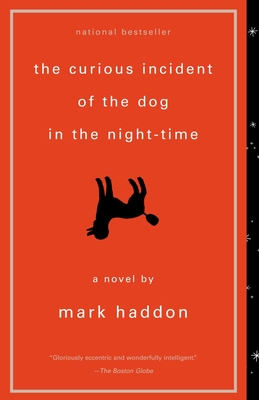
You've designed movie posters professionally and done book covers for fun. What are some differences and similarities you found in designing for movies and books?
For books, I don't have to stick big floating heads on them. It's sad but true. With the majority of movie posters these days, it's about star power. If you have a star in the film, you have to sell him/her. With books, it's up to the reader to imagine each character (until they adapt it for the screen). In the same vein, the designer has more freedom in general with book covers since you don't have a specific visual style to adhere to, nor do you have images from the movie production or photo shoots of the actors to work with. This means you get to do what you want, but it also makes it more challenging since everything has to come from scratch. Of course, there are exceptions for both.
But what I do enjoy about movie key art design is that it's such a collaborative process. So many people put their blood and sweat into making a movie, and the same thing happens when the key art comes into existence. Many designers, illustrators, filmmakers, production artists, and others have a hand in the outcome of a single piece of key art. Book jacket design, much like the craft of book writing, is often more solitary.
What's more fun?
I honestly cannot say which one is more fun...it really depends on the movie/book! Every single one is different! Unless you're doing Twilight covers/posters, then you can do them with your eyes closed.
(I like the book jackets for Twilight fine, but the movie posters are quite unfortunate...)
Remember the days when we wrote together? We were going to attempt an epic fantasy. We started on a Grapes of Wrath sequel! Would you ever be up for that wackiness again?
Yes! I miss our weird writing. I enjoy Peaches of Anger more than Grapes of Wrath. We should write a weird book together and get it published so other weird people can read it.
(Yes, Peaches of Anger! We also have a title for a third. Yes, we did this for fun...in high school.)
What did you read last and would you recommend it?
Speaking of Steinbeck, his book The Winter of Our Discontent was actually one of the last books that I read. I love the way he writes so I definitely enjoyed it and recommend it. Steinbeck's writing inspires me to write, hence Peaches of Anger. Though we were poking fun at his characters, we were inspired by his prose at the same time or else we wouldn't have imitated him. This Steinbeck book inspired me to write something as well, but it wasn't nearly as funny as Peaches. Those were the glory days...
It's Asian/Pacific Islander American Heritage Month. Do you think commemorative months like this are important?
I do think it's an important month to celebrate. I feel like in America, Asian Americans often overlook their heritage for various reasons. Considered as the "model minority" by some, we sometimes do too good of a job at assimilating to society and adapting to other cultures. Along with this ability to fit in, comes the danger of forgetting where we came from. So it's definitely important to set aside a time to remember and celebrate our heritage in our daily lives.
Lastly, what's awesome about being APA?
Amazing math skills. (For YOU, maybe. My math skills are pretty abysmal.) Just kidding. I think being an APA is awesome because we have so much history in our blood. America is a relatively young country in the larger scheme of things. Living in a younger society with progressive thinking definitely has many benefits. But as APAs, I think we're also lucky to also be a part of something with thousands of years of history and culture. For example, in the past 2 years I've done a lot of traveling in China and Korea, where my ancestors came from. It's really amazing to see how far my family tree reaches back and how intertwined these two cultures are.
Thanks Gennia! Please design my future book cover (when/if I ever have a book)! You can find Gennia and her lovely work online at genniacui.com, The Future Collective, and her photo blog at Light Leak, which is also linked in the sidebar.
Have a great Memorial Day weekend everyone!
5.26.2010
Robots and K-Town Queens - APA Month Books
I can't believe it's almost the end of May! Ah! I've got to make the best of this last week for my APA highlights. It's a good thing I found my box of Asian Am Studies books this weekend.
So without further ado, here's two books I really enjoyed.
1. Robot Stories and more Screenplays by Greg Pak: Okay, so this one isn't really a book. It's a collection of the screenplays that make up Robot Stories plus a few others. The Robot Stories film consists of these 4 sci-fi-ish stories: "My Robot Baby," "The Robot Fixer," "Machine Love," and "Clay."
My favorite of these was "The Robot Fixer," in which a mother becomes obsessed with fixing and completing her now comatose son's childhood collection of robot toys in an effort to reconnect with him after years of estrangement. It's a touching portrayal of grief, healing, and the dichotomy that technology (as represented by the robots) can be both distancing and connective.
Not only are these thoughtful stories, the short films also give screen time to talented APA actors.
You can find out more about Robot Stories here at the Robot Stories website.
2. Queens of K-Town by Angela Mi Young Hur:

This was a novel that my Asian Am Lit professor took a chance on because it was a debut novel the year she taught it to us, and she didn't know how well it'd work for a class. I was surprised by how much I liked it because I was a little skeptical, especially when faced with the dual narratives told in different points of view (1st and 3rd, if you're curious).
This is your edgy, coming-of-age story of four teenaged friends set in glitzy and gritty NYC Koreatown, but it's actually a double coming-of-age story because it has parallel story lines - one set ten years in the past, the other set in the present. At 26, Cora Moon returns to NYC determined to end her life, mirroring her friend's suicide ten years ago. While planning out the last week of her life, Cora remembers the events of the summer when she was sixteen and tries to make sense of her life then and now.
The book is a fresh take on both the immigrant experience and the identity struggles faced by many 1.5 and second generation Asian Americans, and it does so without being overly melodramatic or heavy-handed. It's also just a well-drawn portrayal of the turbulence of young adulthood. The prose is a little uneven at times, but overall, it's engaging and rich. Angela Hur manages to capture the essence of specific places and events, and though the premise seems kind of depressing, the story itself isn't. I also ended up really liking the dual narrative. It was an interesting way to show how Cora has changed and how she's the same, and it ups the tension as the story circles towards the ledge of a building.
That's it for now. See you again soon for more books and features as the month wraps up.
5.21.2010
Randomosity on Fridays: Musings & Features
It's Friday, which means it's time for randomosity and fun times! I'm going to see OK Go in concert tonight, and I am uber excited. Quirkiness + good music + hotness = awesomesauce! The day needs to go by faster.
Randomly, did you check out the Google splash page today? You can play PacMan on it!
Anyway, here's my five.
1. I am steadily devouring books. Just finished Kimberly Derting's The Body Finder, which I enjoyed but I think the suspense was a bit dulled for because I watch too many crime dramas. Let's just say that watching Criminal Minds has upped my serial killer-related twist expectation to a whole other level. I'm reading Catherine Fisher's Incarceron, and it is flooring me with its awesome. The world is so interesting and intriguing. It's like Sci-Fi + fantasy with a dash of Victoriana. It makes me positively gleeful. And speaking of Glee, Joss Whedon directed a great episode. So much epic, and did you check out Mike Chang's and Artie's dance moves?
 2. I borrowed The Lost Books of the Odyssey by Zachary Mason, but Luce is reading it first since I'm preoccupied with Incarceron. I cannot tell you how stoked I am to read this book because I LOVE Greek mythology, and I especially love the Odyssey. This book takes episodes from the Odyssey and re-imagines them. Each chapter is like a short story. Luce says it's very good so far: the language is spare but evocative - just like the style of the original epic poem.
Basically, when two pages of spare writing can blow your mind, it's a very very good thing. Excited!!!
3. Is seeing someone read consistently really that weird and/or uncommon? Luce and I were discussing how our acquaintances (i.e. coworkers, people not that familiar/close to us) seem to think it's very strange that we read so much, that we LIKE to read. There are assumptions that this reading thing makes us bookish, shy/quiet, maybe even antisocial. What I usually get is amazement that I've read so much so quickly. This is funny to me because I'm one of the slowest readers I know. But what strikes me is that these sorts of reactions seem kind of, well, high school, don't you think? In high school, there's the whole clique-mentality thing going on and a general idea that, 'Hey, you must be a nerd if you read a lot.' And sure, both of us were totally in the nerd crowd then, but outside of high school, I was under the impression this idea didn't hold as much sway. I mean, people read for a myriad of reasons, and they read different kinds of books. I know I'm kind of preaching to the choir here since I know most of you are readers and/or writers, but is it really that weird?
Besides, I thought the whole Harry Potter thing brought reading back like JT brought back sexy. No?
 4. Speaking of high school, one of my HS friends, Miss Beverly at When Your Eyes Meet Mine, draws some really wonderful and cute doodles. I like her quote-doodles because sometimes, when I'm feeling down, one of those will pop up and it'll lift me up (see to the right or here). She also makes things like pins and scarves! Basically, she's quite talented and I think you should check out her work.
5. Also back in high school, while goofing off in Newspaper, my friends and I discovered this group of UCSD students who liked to make music videos and short films. Well, since then they've continued to do the video thing, and they've come up with some good ones. They're called Wong Fu Productions. They've expanded a bunch since those days of yore, and it's cool they're still around doing their thing. One of my favorite films of theirs is "Yellow Fever." Check it out below.
That's all everyone! Have a fantastic weekend!
Randomly, did you check out the Google splash page today? You can play PacMan on it!
Anyway, here's my five.
1. I am steadily devouring books. Just finished Kimberly Derting's The Body Finder, which I enjoyed but I think the suspense was a bit dulled for because I watch too many crime dramas. Let's just say that watching Criminal Minds has upped my serial killer-related twist expectation to a whole other level. I'm reading Catherine Fisher's Incarceron, and it is flooring me with its awesome. The world is so interesting and intriguing. It's like Sci-Fi + fantasy with a dash of Victoriana. It makes me positively gleeful. And speaking of Glee, Joss Whedon directed a great episode. So much epic, and did you check out Mike Chang's and Artie's dance moves?

Basically, when two pages of spare writing can blow your mind, it's a very very good thing. Excited!!!
3. Is seeing someone read consistently really that weird and/or uncommon? Luce and I were discussing how our acquaintances (i.e. coworkers, people not that familiar/close to us) seem to think it's very strange that we read so much, that we LIKE to read. There are assumptions that this reading thing makes us bookish, shy/quiet, maybe even antisocial. What I usually get is amazement that I've read so much so quickly. This is funny to me because I'm one of the slowest readers I know. But what strikes me is that these sorts of reactions seem kind of, well, high school, don't you think? In high school, there's the whole clique-mentality thing going on and a general idea that, 'Hey, you must be a nerd if you read a lot.' And sure, both of us were totally in the nerd crowd then, but outside of high school, I was under the impression this idea didn't hold as much sway. I mean, people read for a myriad of reasons, and they read different kinds of books. I know I'm kind of preaching to the choir here since I know most of you are readers and/or writers, but is it really that weird?
Besides, I thought the whole Harry Potter thing brought reading back like JT brought back sexy. No?

5. Also back in high school, while goofing off in Newspaper, my friends and I discovered this group of UCSD students who liked to make music videos and short films. Well, since then they've continued to do the video thing, and they've come up with some good ones. They're called Wong Fu Productions. They've expanded a bunch since those days of yore, and it's cool they're still around doing their thing. One of my favorite films of theirs is "Yellow Fever." Check it out below.
That's all everyone! Have a fantastic weekend!
5.19.2010
Strangers from a Different Shore - APA Month Book
For APA Month, I said I'd be highlighting some books that I liked relating to Asian and Pacific Islander Americans. Most of these books are fictional works since I mostly read fiction and most of the books I read while completing my Asian American Studies minor were fiction, given my focus on Asian Am lit. However, I think it'd be an oversight for me if I didn't include Strangers from a Different Shore by Ronald Takaki.
Considering the strike against Ethnic Studies in Arizona and my post on interstitial histories, it is also fitting that I begin my APA book features with Strangers from a Different Shore.
 Strangers from a Different Shore is essentially a history of Asian Americans. It was used as the basic text for my Asian American History class, and it served as a broad and eye-opening spring board for the topics we covered. What makes this book stand out, though, is its ability to take the dry facts and figures of history and the multiple threads of Asian American experience and weave it all into a powerful, emotional narrative.
Now, think about this for a second. The term Asian American encompasses many different groups; as a blanket term, it includes Pacific Islanders, East Asians, Southeast Asians, and Southwest Asians. You can split these terms down into more specific groups, and those groups don't all share the same journey. Now try putting all those stories into a common narrative while working in the important dates, names, and statistics (don't forget footnotes!) required in a good history book. Is your brain ready to explode yet?
Well, Ronald Takaki somehow pulls it off, and he does so beautifully (which I really appreciate as both a writer and a reader). While showing you the differences among the histories of Asian American ethnic groups, he also shows you how these histories parallel and intersect each other, and how all of them come together to reveal a common thread. Takaki puts faces on the new immigrants, the railroad workers, the internees, and the second generation Asian Americans by interspersing personal recollections, primary sources, anecdotes, and literature and poetry into the text. The book discusses the questions of identity faced by many second generation Asian Americans, and then it introduces you to Jade Snow Wong, a Chinese American girl facing those problems. After discussing the detainment of many Asian immigrants at Angel Island, the book illustrates the frustration and discontent by citing a poem from one of those immigrants.
Strangers from a Different Shore is detailed without being tedious. It has a distinct voice and passion to it that is neither preachy nor intrusive. It shows a not-so-well-known side of the immigrant experience, and it shows how much Asian Americans are a part of the history of America.
In flipping through this book again to write this post, I was struck by how timely it is. The preface to the updated and revised edition is titled Confronting "Cultural Literacy" and in this preface, Ronald Takaki touches on why it is a mistake to think Ethnic Studies is divisive and a vehicle for ethnic chauvinism. He points out that the experience of Asian Americans is actually very "American."
Anyway, I hope this interests some of you in APA History, or at least in this book or books like it.
5.13.2010
The Importance of Interstitial Histories
People that know me know that I'm a super laid-back person. I'm also a 9 in the Enneagram of Personality, which basically means I really, really dislike conflict. No, really. There are few things that get me riled up enough to compel me to discuss them outside of my closest friends and family. So you won't see a lot of posts like this about charged topics, and plus, that's not really the focus of this blog. Nonetheless, this is something I think is important.
Arizona has been a hot topic in the news of late largely because of its controversial new immigration law, SB 1070.
Not as well known is the bill the Arizona legislature passed soon after SB1070 became law. This other bill would ban ethnic studies programs from being taught in the state. Why? Apparently, ethnic studies programs "advocate separatism and racial preferences" and "are designed to promote ethnic chauvinism."*
(EDIT: Oh wait, HB2281 was just signed INTO LAW yesterday. This just gets better and better, doesn't it?)
There are many things I can say about those statements, but it will probably degenerate into sputtering noises, F-bombs, and general speechlessness. That's why I ranted about this first with my sister and let it all simmer for a few days before I blogged about it.** I want to present in a coherent and intelligent manner why ethnic studies is important and why both of those statements completely miss the point of ethnic studies.
History is essentially a story with many, many moving parts and perspectives, and obviously not all of it is going to be represented. That's fine and is indeed necessary to create a coherent and meaningful common past. History, with a capital H, is the most important people and events (the importance of which is itself subjective to one's location) strung together in chronological order. It's meant to give us a general understanding of who we were and where we came from, so that we can see who we might become and where we might go.
But History is written by the winners of conflicts and by those in power.
Think back to your grade school history classes and try to recall how much time was given to covering the experience of women and people of color in America. Ask yourself from whose point of view is the overarching narrative.
Ethnic Studies is about giving voice to and understanding the experience and histories of people of color. It is for this same reason that we have Women's Studies as well. These - what could be called 'niche' - studies exist to give representation to traditionally under-represented groups. These programs and courses aren't about superseding or replacing History as we know it. They are about complementing and supplementing our general knowledge. They are about providing a broader perspective, so that we can create a more complete picture of the American experience.
The reasoning behind the Arizona law banning ethnic studies programs in schools is that ethnic studies "advocate separatism and racial preferences" and "ethnic solidarity instead of treatment of pupils as individuals." The Arizona State Superintendent for Public Instruction sums it up like this:
To ignore that race and racism still exist, to pretend the struggles of minority groups didn't happen or to gloss over them is to marginalize those historical narratives. History is sometimes ugly, but the point is that we've struggled and continue to struggle to overcome the ugliness, to be better.
Ethnic Studies acknowledges race and discusses it in the context of how it shapes history and society. It takes a piece of the American societal puzzle (i.e. the experience of a specific ethnic group), examines it, and then puts it back into the larger puzzle. It is NOT about isolating/separating the piece. It highlights the piece and shows how it is part of the whole.
The new Arizona law allows for the continuance of courses for Native American pupils and English as second language classes. "It also does not prohibit the teaching of the Holocaust or other cases of genocide." I'm guessing teaching the whole Civil Rights Movement is still okay too. The thing is these specific historical events, integral to the dominant historical narrative, have a lot to do with specific ethnic groups. It seems a little disingenuous to say we can teach token bits of ethnic history, but we cannot allow any in-depth classes dedicated to any individual ethnic group and their history in America.
Of course, I'm not asking for History classes to integrate everything. Like I said, it would be impossible to teach (much less learn) it all in a coherent, meaningful way. History is a good, working summary of our past, and that's what it should be - a summary. BUT don't take away the opportunity for people to learn about other narratives, especially if those narratives speak to them and show them how they fit into the fabric of our diverse nation. You hear all the time from students in school, Why should I care about this? What does this have to do with me? Why is all this stuff important?
What if, maybe, all they need is an event or person or movement or story they can relate to?
For some of these students, ethnic studies might be a way to find that - to find an experience that more closely resembles their own, so that they can begin to see how they fit into and belong in History at large.
The United States is a diverse and multi-cultural, multi-ethnic nation. Is it so much to ask for the opportunity to learn about what makes it diverse? Is it wrong for me to want to learn about what the people who came before me went through and what they fought for to give me the rights and privileges I have today?
Ethnic Studies isn't about promoting resentment among ethnic groups or racial preference or separatism. It isn't about how one group struggled or suffered or achieved more than another. It isn't about supplanting the dominant American Historical narrative.
It's about showing that people of color struggled and triumphed and dreamed in America too, and that their experiences helped shape the nation we are today. It's about showing that minority groups DO have a place and role in American History. It's about HOW these groups FIT INTO that narrative, showing them that they're part of the making of this nation too, that their stories are also important.
If anything, Ethnic Studies is about showing us how we are all American, despite our various journeys to get here.
I hope that made sense. Thank you for reading.
P.S. "HB 2281 bans schools from teaching classes that are designed for students of a particular ethnic group, promote resentment or advocate ethnic solidarity over treating pupils as individuals. The bill also bans classes that promote the overthrow of the U.S. government."
The implication that Ethnic Studies promotes treason against the U.S. government seriously offends me. I'm American. Please don't make it seem like programs about American ethnic experience are somehow UN-American.
*All direct quotes can be found in the linked articles.
1. Arizona Legislature Passes Bill to Curb 'Chauvanism' in Ethnic Studies Programs from FoxNews.com
2. Arizona bill targeting ethnic studies signed into law from LATimes.com
**I heard about the bill last Friday and let myself absorb the news and calm down. Yesterday, when I came to finish this post, I found out about its becoming law. My cooling off period now seems a little pointless because I had to make A;KLLSKA;JFLI@#(*LS;AJF noises for a while before I could straighten my thoughts back in order.
Arizona has been a hot topic in the news of late largely because of its controversial new immigration law, SB 1070.
Not as well known is the bill the Arizona legislature passed soon after SB1070 became law. This other bill would ban ethnic studies programs from being taught in the state. Why? Apparently, ethnic studies programs "advocate separatism and racial preferences" and "are designed to promote ethnic chauvinism."*
(EDIT: Oh wait, HB2281 was just signed INTO LAW yesterday. This just gets better and better, doesn't it?)
There are many things I can say about those statements, but it will probably degenerate into sputtering noises, F-bombs, and general speechlessness. That's why I ranted about this first with my sister and let it all simmer for a few days before I blogged about it.** I want to present in a coherent and intelligent manner why ethnic studies is important and why both of those statements completely miss the point of ethnic studies.
History is essentially a story with many, many moving parts and perspectives, and obviously not all of it is going to be represented. That's fine and is indeed necessary to create a coherent and meaningful common past. History, with a capital H, is the most important people and events (the importance of which is itself subjective to one's location) strung together in chronological order. It's meant to give us a general understanding of who we were and where we came from, so that we can see who we might become and where we might go.
But History is written by the winners of conflicts and by those in power.
Think back to your grade school history classes and try to recall how much time was given to covering the experience of women and people of color in America. Ask yourself from whose point of view is the overarching narrative.
Ethnic Studies is about giving voice to and understanding the experience and histories of people of color. It is for this same reason that we have Women's Studies as well. These - what could be called 'niche' - studies exist to give representation to traditionally under-represented groups. These programs and courses aren't about superseding or replacing History as we know it. They are about complementing and supplementing our general knowledge. They are about providing a broader perspective, so that we can create a more complete picture of the American experience.
The reasoning behind the Arizona law banning ethnic studies programs in schools is that ethnic studies "advocate separatism and racial preferences" and "ethnic solidarity instead of treatment of pupils as individuals." The Arizona State Superintendent for Public Instruction sums it up like this:
State Superintendent for Public Instruction Tom Horne called passage in the state House a victory for the principle that education should unite, not divide students of differing backgrounds.
"Traditionally, the American public school system has brought together students from different backgrounds and taught them to be Americans and to treat each other as individuals, and not on the basis of their ethnic backgrounds," Horne said. "This is consistent with the fundamental American value that we are all individuals, not exemplars of whatever ethnic groups we were born into. Ethnic studies programs teach the opposite, and are designed to promote ethnic chauvinism."My response to these statements is that yes, American education should unite students, teach them to consider themselves Americans, and teach them to treat each other as individuals/judge each other by character, but education should also educate. We DO NOT live in a post-racial world. We can, do, and should teach that everyone should be judged by the content of their character, but that still doesn't change the color of my skin and what some people might think about it. I'm not an exemplar of my ethnic group, but that doesn't stop people from making judgments about me based on my ethnicity.
To ignore that race and racism still exist, to pretend the struggles of minority groups didn't happen or to gloss over them is to marginalize those historical narratives. History is sometimes ugly, but the point is that we've struggled and continue to struggle to overcome the ugliness, to be better.
Ethnic Studies acknowledges race and discusses it in the context of how it shapes history and society. It takes a piece of the American societal puzzle (i.e. the experience of a specific ethnic group), examines it, and then puts it back into the larger puzzle. It is NOT about isolating/separating the piece. It highlights the piece and shows how it is part of the whole.
The new Arizona law allows for the continuance of courses for Native American pupils and English as second language classes. "It also does not prohibit the teaching of the Holocaust or other cases of genocide." I'm guessing teaching the whole Civil Rights Movement is still okay too. The thing is these specific historical events, integral to the dominant historical narrative, have a lot to do with specific ethnic groups. It seems a little disingenuous to say we can teach token bits of ethnic history, but we cannot allow any in-depth classes dedicated to any individual ethnic group and their history in America.
Of course, I'm not asking for History classes to integrate everything. Like I said, it would be impossible to teach (much less learn) it all in a coherent, meaningful way. History is a good, working summary of our past, and that's what it should be - a summary. BUT don't take away the opportunity for people to learn about other narratives, especially if those narratives speak to them and show them how they fit into the fabric of our diverse nation. You hear all the time from students in school, Why should I care about this? What does this have to do with me? Why is all this stuff important?
What if, maybe, all they need is an event or person or movement or story they can relate to?
For some of these students, ethnic studies might be a way to find that - to find an experience that more closely resembles their own, so that they can begin to see how they fit into and belong in History at large.
The United States is a diverse and multi-cultural, multi-ethnic nation. Is it so much to ask for the opportunity to learn about what makes it diverse? Is it wrong for me to want to learn about what the people who came before me went through and what they fought for to give me the rights and privileges I have today?
Ethnic Studies isn't about promoting resentment among ethnic groups or racial preference or separatism. It isn't about how one group struggled or suffered or achieved more than another. It isn't about supplanting the dominant American Historical narrative.
It's about showing that people of color struggled and triumphed and dreamed in America too, and that their experiences helped shape the nation we are today. It's about showing that minority groups DO have a place and role in American History. It's about HOW these groups FIT INTO that narrative, showing them that they're part of the making of this nation too, that their stories are also important.
If anything, Ethnic Studies is about showing us how we are all American, despite our various journeys to get here.
I hope that made sense. Thank you for reading.
P.S. "HB 2281 bans schools from teaching classes that are designed for students of a particular ethnic group, promote resentment or advocate ethnic solidarity over treating pupils as individuals. The bill also bans classes that promote the overthrow of the U.S. government."
The implication that Ethnic Studies promotes treason against the U.S. government seriously offends me. I'm American. Please don't make it seem like programs about American ethnic experience are somehow UN-American.
*All direct quotes can be found in the linked articles.
1. Arizona Legislature Passes Bill to Curb 'Chauvanism' in Ethnic Studies Programs from FoxNews.com
2. Arizona bill targeting ethnic studies signed into law from LATimes.com
**I heard about the bill last Friday and let myself absorb the news and calm down. Yesterday, when I came to finish this post, I found out about its becoming law. My cooling off period now seems a little pointless because I had to make A;KLLSKA;JFLI@#(*LS;AJF noises for a while before I could straighten my thoughts back in order.
Subscribe to:
Posts (Atom)
Subscribe To


 Posts
All Comments